In the dynamic world of furniture manufacturing, the final appearance and protective quality of a piece are paramount. This is where furniture skin finishing equipment plays a critical role, transforming raw materials into products that are visually appealing, durable, and market-ready. This comprehensive guide delves into the technologies, processes, and strategic considerations behind selecting the right equipment for your production needs. We will explore specialized machinery that caters to both high-volume lines and bespoke craftsmanship, ensuring every reader finds valuable insights for their operation. As a dedicated provider in this field, Huzhou Tongxu Machinery Equipment Co., Ltd. leverages its expertise in intelligent coating systems to contribute to these advancements, focusing on delivering tailored solutions from simple machines to complex production lines.
Understanding the Core Technology in Furniture Finishing
Modern furniture finishing is a sophisticated interplay of chemistry, precision engineering, and automation. At its heart lies the equipment designed to apply coatings—paints, stains, lacquers, and protective films—with unparalleled consistency and efficiency. Moving beyond traditional manual methods, contemporary systems integrate advanced features such as programmable logic controllers (PLCs), precision feeding mechanisms, and environmentally conscious waste recovery systems. These technologies are not merely about applying a coating; they are about ensuring repeatability, minimizing material waste, and achieving a flawless surface that meets increasingly high consumer and regulatory standards. The evolution from simple spray guns to integrated, intelligent coating lines represents a significant leap in manufacturing capability and product quality. Companies at the forefront, like Huzhou Tongxu Machinery Equipment Co., Ltd., emphasize this integration by combining new processes from global coating innovations with robust design and development to create high-quality equipment that meets diverse productivity needs.
The Shift Towards Automated and Intelligent Systems
The industry is witnessing a definitive shift from labor-intensive processes to automated solutions. This transition is driven by the need for higher throughput, consistent quality, and addressing challenges in skilled labor availability. Intelligent systems now can adjust parameters in real-time based on the substrate, ambient conditions, and desired finish thickness. For instance, a modern curtain coater can maintain a perfectly consistent film thickness across a panel regardless of minor speed fluctuations in the conveyor. This level of control is impossible to achieve manually. Furthermore, data collection from these machines allows for predictive maintenance, reducing downtime and ensuring continuous operation. The integration of such smart technology is what separates basic equipment from a truly competitive production asset. In practice, this means manufacturers must evaluate not just the mechanical function but the control systems and software integration of any furniture skin finishing equipment they consider. The principle of "high quality" that guides Huzhou Tongxu Machinery Equipment Co., Ltd.'s production process is reflected in this holistic approach to equipment design, where fine management and scientific control extend into the digital realm of machine operation.
Exploring Specialized Equipment for Diverse Finishing Needs
No single machine can address the vast array of finishing requirements in the furniture industry. The choice of equipment is fundamentally linked to the product type, production volume, coating material, and desired aesthetic effect. Understanding the portfolio of available machinery is the first step in building an efficient finishing line. This aligns with the product philosophy of Huzhou Tongxu Machinery Equipment Co., Ltd., whose offerings in the flat coating series, line coating series, and special-shaped coating series—covering over 20 varieties—are designed to support this very diversity. Whether a manufacturer requires roller coating, curtain coating, or spray coating methods, selecting the right specialized tool is crucial.
Flat Panel Finishing Systems
This category is essential for manufacturers of cabinet doors, tabletops, shelving, and other large, flat components. The primary goal here is to achieve a perfectly uniform coating without runs, sags, or orange peel texture.
Roller Coaters for Flat Surfaces
Roller coaters are exceptionally efficient for applying base coats, stains, or solid colors to flat panels. They work by transferring coating material from a pan via a series of precision-ground rollers directly onto the substrate. The key advantage is speed and material efficiency, with very low overspray. How to choose the best roller coating machine for wooden panels becomes a critical question for many operations. The decision hinges on several factors: the viscosity of coatings you typically use (e.g., UV lacquers vs. water-based paints), the required production speed (measured in linear meters per minute), and the level of finish quality. For high-gloss finishes, a multi-roller system with polishing rollers might be necessary, whereas a single-roller system may suffice for primer or sealant applications. The precision of the gap between the applicator roller and the backing roller is paramount, as it directly controls the wet film thickness. Machines from the flat coating series are engineered to provide this precision reliably.
To illustrate the considerations, here is a comparison between two common configurations:
| Consideration |
Direct Roller Coater |
Reverse Roller Coater |
| Coating Transfer |
Roller and panel move in the same direction at the point of contact. |
Applicator roller rotates against the direction of panel travel. |
| Best For |
Lower viscosity materials, thinner films, and faster line speeds. |
Higher viscosity materials (e.g., putties, thick primers), achieving a thicker and more controlled film. |
| Finish Quality |
Very good for standard finishes; can struggle with filling wood grain. |
Excellent for filling pores and achieving a smooth, level surface, often used for the first coat. |
| Maintenance Complexity |
Generally simpler, easier to clean. |
More complex mechanism requires meticulous cleaning and adjustment. |
When pondering how to choose the best roller coating machine for wooden panels, one must also consider future production flexibility. Will you need to switch between different coating types frequently? Some advanced models offer quick-change roller systems and digitally controlled gap settings to facilitate such changes, minimizing downtime. This focus on adaptability and precision is a hallmark of well-designed flat coating equipment.
Curtain Coaters for High-Gloss and Even Coverage
For achieving a pristine, high-gloss finish or applying a perfectly even layer of liquid laminate, curtain coating is the technology of choice. The process involves creating a continuous, waterfall-like "curtain" of coating material through a precision slit. The panel is conveyed directly beneath this curtain, receiving a uniform coat. The quality is exceptional, with no brush or roller marks. However, it requires a stable, uninterrupted flow and is best suited for flat, horizontal surfaces. A key operational question is about curtain coating machine maintenance and troubleshooting guide. Regular maintenance is vital to prevent defects like curtains splitting or thickness variations.
Essential maintenance and troubleshooting points include:
- Daily: Thoroughly cleaning the coating head and slit to prevent dried material buildup, which can distort the curtain. Checking the viscosity and temperature of the coating material to ensure consistent flow characteristics.
- Weekly/Monthly: Inspecting and calibrating the conveyor belt alignment and speed sensor. Verifying the levelness of the coating head. Checking all pumps and filters in the coating circulation system.
- Troubleshooting Common Issues:
- Curtain Splits or "Holes": Often caused by incorrect viscosity (too high), air bubbles in the coating, or a contaminated/ damaged lip on the coating head.
- Uneven Coating Thickness Across Panel Width: Can result from an unlevel coating head, a warped or misaligned conveyor, or uneven wear on the slit edges.
- Bubbles in the Cured Film: May originate from air entrainment in the coating supply system or from the substrate itself if not properly sealed.
Adherence to a rigorous curtain coating machine maintenance and troubleshooting guide is non-negotiable for preserving output quality. The fine management principles applied in the manufacturing of such equipment, as seen at Huzhou Tongxu Machinery Equipment Co., Ltd., should be mirrored in the end-user's maintenance regimen to ensure long-term performance.
Finishing Solutions for Non-Flat and Specialized Components
Furniture is not all flat panels. Chair legs, carved details, frame components, and other three-dimensional parts present a unique finishing challenge where traditional roller or curtain coaters are ineffective.
Spraying Systems for Complex Geometries
Spray finishing remains the most versatile method for applying coatings to complex shapes. Modern systems have evolved far beyond simple manual spray guns.
- Automatic Spray Guns: Mounted on reciprocating or robotic arms, these provide consistent, programmable coverage. They are ideal for batches of similar parts.
- Rotary Spray Turntables: The part rotates in front of stationary or moving spray guns, ensuring all sides are coated evenly. This is efficient for small to medium-sized components like chair legs.
- High-Volume, Low-Pressure (HVLP) and Airless Systems: HVLP offers high transfer efficiency (less overspray), while airless systems can handle thicker materials and cover large areas quickly.
Selecting the correct system depends on part geometry, production volume, and coating type. The special-shaped coating series of equipment is specifically engineered to address these challenges, providing targeted solutions for components that defy flat finishing methods.
Dipping and Flow Coating for Small Parts
For small, numerous components like knobs, dowels, or metal fittings, dipping or flow coating can be highly efficient. Dipping involves submerging a rack of parts into a coating tank. Flow coating, on the other hand, involves cascading coating over parts as they pass through a tunnel. Both methods coat all surfaces simultaneously but may require draining time and can lead to pooling. They are often used for primer or single-color applications. The choice between them often comes down to part geometry and the desire to minimize coating usage, as flow coating can be more efficient through recycling.
Critical Factors in Selecting and Operating Your Equipment
Investing in furniture skin finishing equipment is a significant decision that impacts product quality, operational cost, and long-term competitiveness. Beyond understanding the types of machines, one must consider broader integration and operational factors.
Evaluating Cost, Efficiency, and Return on Investment
The purchase price is just one part of the total cost of ownership. A comprehensive evaluation must include:
Throughput and Labor Requirements
A fully automated line coating system may have a high upfront cost but can dramatically increase throughput while reducing labor from multiple operators to perhaps one monitor. Conversely, a semi-automatic spray booth has a lower capital cost but higher ongoing labor and material costs due to lower transfer efficiency. Calculating the cost per finished panel or component over a 5-year period provides a clearer financial picture. This analysis directly ties into the value proposition of comprehensive surface treatment equipment that aims to meet various productivity and efficiency needs, ensuring the investment delivers tangible returns through increased output and reduced waste.
Material Utilization and Environmental Compliance
Modern equipment is designed to maximize material usage and minimize volatile organic compound (VOC) emissions. Roller and curtain coaters typically have transfer efficiencies above 95%, while even advanced spray systems may reach 65-80%. Higher efficiency means lower material costs and less waste for disposal. Furthermore, integrated powder coating systems or water-based coating compatible machines address stringent environmental regulations. Considering the price range for automatic UV coating lines for furniture necessitates factoring in these environmental benefits, which can translate into compliance savings and enhanced marketability for "greener" products. The price is not just for the machinery but for the sustainable and compliant production capability it enables.
Integration with Drying and Curing Technologies
Applying the coating is only half the process. The choice of drying or curing technology is inseparable from the application equipment.
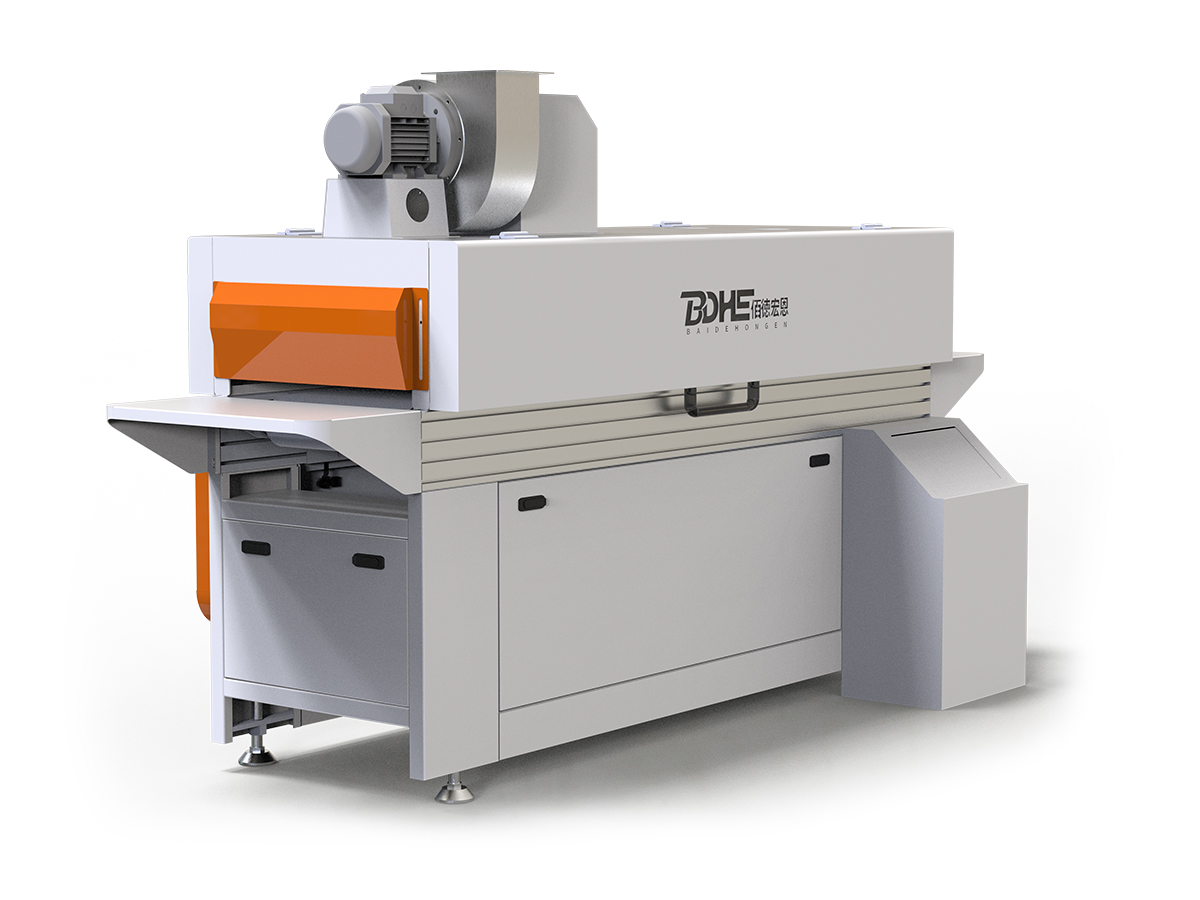
UV Curing Systems
UV curing uses ultraviolet light to instantly polymerize and harden specially formulated coatings. It offers tremendous advantages: curing in seconds, allowing for immediate handling and stacking; producing a very hard, durable finish; and emitting near-zero VOCs. The price range for automatic UV coating lines for furniture is broader than for conventional lines because it includes the UV curing tunnels (with lamps, reflectors, and cooling systems) and often requires precise conveyor synchronization. A typical mid-range, complete UV flatline system for furniture panels represents a significant but highly productive investment. When evaluating the price, consider the energy efficiency of the UV lamps, their lifespan, and the cost of replacement, as these are key ongoing operational expenses.
Comparing UV curing with traditional thermal drying highlights the operational differences:
| Aspect |
UV Curing Line |
Thermal Drying (Convection/Oven) |
| Curing Time |
3-10 seconds |
Several minutes to hours |
| Floor Space |
Very compact due to instant cure. |
Requires long oven tunnels or large drying rooms. |
| Energy Consumption |
High intensity but very short duration; overall can be lower. |
Continuous heating of large air volumes; heat loss is a factor. |
| Finish Properties |
Excellent hardness and chemical resistance. Can be limited in film build. |
Wide range of finishes possible. Softer cure may require longer hardening times. |
| Coating Formulation |
Requires specific UV-curable coatings. |
Compatible with a vast array of solvent-based, water-based, and acid-curing coatings. |
Infrared and Thermal Drying
Infrared (IR) dryers use radiant heat to directly heat the coating and substrate, offering faster startup and response times than convection ovens, which heat the air. Convection ovens provide gentle, even heat suitable for complex parts where shadowing might occur with IR. The choice depends on the coating chemistry, part geometry, and production speed. Often, a hybrid approach (IR for flash-off, convection for full cure) is used. For operations applying water-based finishes, efficient drying is critical to prevent defects, making the integration of the application machine with the dryer a key engineering consideration.
Future Trends and Making an Informed Decision
The landscape of furniture finishing equipment continues to evolve, driven by digitalization, sustainability, and demand for greater customization.
Embracing Industry 4.0 and Customization
The future lies in connected machines. Equipment that provides real-time data on coating consumption, production counts, motor health, and defect rates allows for true smart manufacturing. This data can feed into broader production planning systems. Furthermore, the ability to do quick changeovers and handle smaller, customized batches is becoming a competitive advantage. Equipment designed for flexibility, such as digitally controlled roller coaters with recipe memory or robotic spray cells that can be reprogrammed for new part shapes, will be paramount. This trend towards adaptable, intelligent systems is where research and development efforts, like those at Huzhou Tongxu Machinery Equipment Co., Ltd., are focused, combining new processes with advanced manufacturing concepts to future-proof their equipment offerings.
A Strategic Approach to Procurement
Choosing the right furniture skin finishing equipment is a strategic business decision. Begin by thoroughly analyzing your current and anticipated product mix, volume, and quality requirements. Engage with equipment suppliers who offer not just machines, but application expertise and reliable after-sales service. Request demonstrations using your own samples or similar substrates. Scrutinize the build quality, control system, and ease of maintenance. Inquire about training and spare parts availability. For businesses looking to upgrade specific segments, understanding the benefits of upgrading to a CNC finishing machine for custom furniture could be the key. A Computer Numerical Control (CNC) finishing machine, often a multi-axis robotic spray cell, offers unparalleled flexibility and precision for one-off pieces or small batches with complex designs. The benefits are substantial:
- Precision and Consistency: The robot follows a programmed path exactly, applying the same amount of coating in the same pattern every time, eliminating human variability.
- Complex Pattern Execution: It can perform difficult spraying maneuvers, such as inside deep grooves or on highly contoured surfaces, that are challenging manually.
- Material Savings: Optimized spray paths and controlled trigger times can reduce overspray by 20-30% compared to skilled manual spraying.
- Labor Re-allocation: Frees skilled painters from repetitive tasks to focus on quality control, custom color matching, or intricate hand-work that truly requires a human touch.
- Quick Changeover: Switching programs for a different furniture piece can be as simple as loading a new digital file.
The strategic move to such technology encapsulates the industry's direction: leveraging automation not to replace craftsmanship, but to enhance its consistency and economic viability, especially in the custom and high-end sectors. Ultimately, the most successful manufacturers will be those who view their finishing equipment not as a cost center, but as a core investment in product quality, operational agility, and brand reputation.



 English
 中文简体
中文简体

