Understanding the Working Principle of a Two-Axis Brush Machine
1. Introduction to the Two-Axis Brush Machine
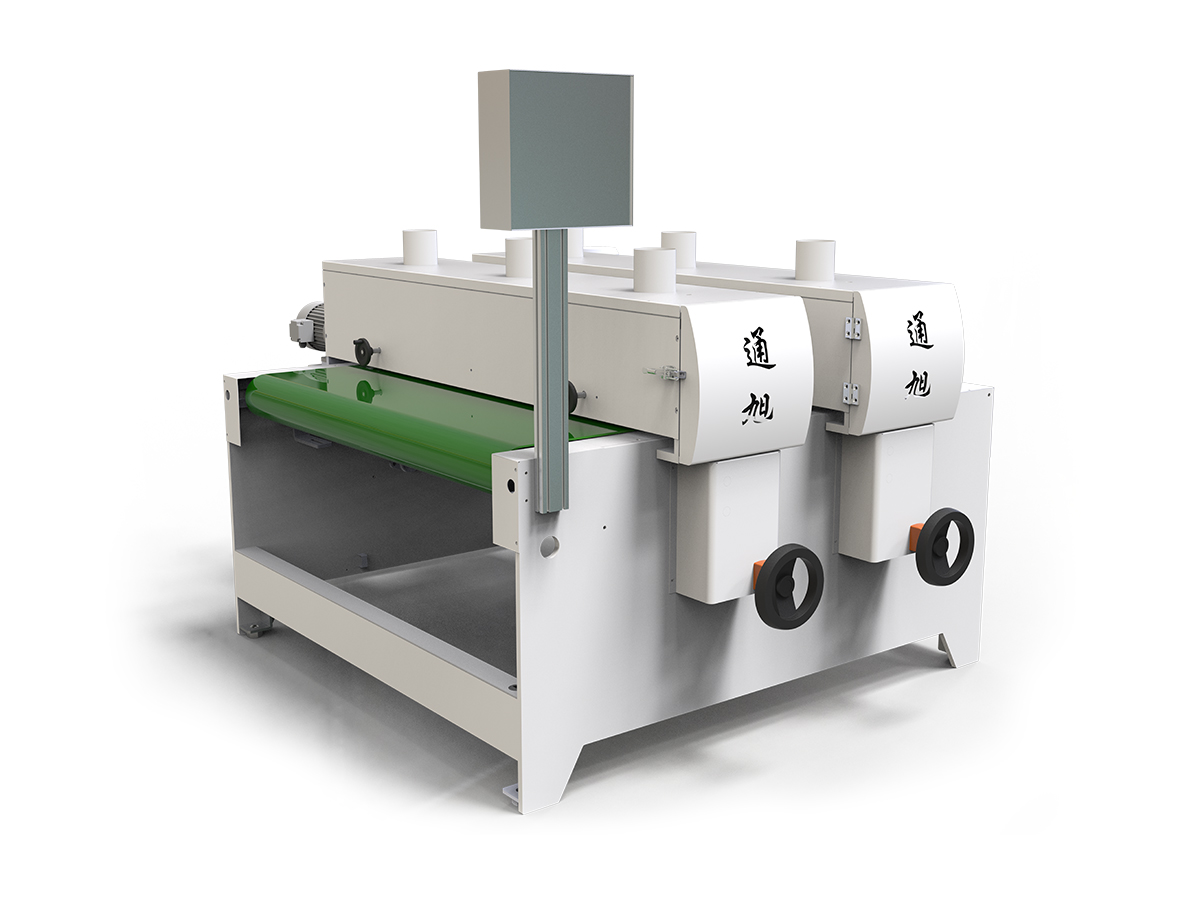
A two-axis brush machine is an advanced automated device used to produce brushes with precision and efficiency. It operates on two motion axes—typically the X-axis and Y-axis—to perform both drilling and tufting operations. The dual-axis configuration ensures accurate bristle placement, uniform density, and consistent brush shape. This technology is widely applied in manufacturing industrial brushes, household cleaning brushes, and personal care brushes.
2. The Working Mechanism
The working mechanism of a two-axis brush machine involves coordination between the horizontal and vertical movements of its components. The X-axis controls the movement of the brush base, while the Y-axis manages the tufting head or drilling tool. Through programmed motion, these axes work together to drill holes and insert bristles at precise locations according to predefined patterns. The machine uses a servo motor system and control software to synchronize these movements, ensuring stable performance and repeatability.
- Drilling Process: The machine first drills evenly spaced holes into the brush base material, which can be wood, plastic, or resin.
- Fiber Insertion: The tufting system inserts the bristles into each hole, securing them with wire or adhesive, depending on the brush type.
- Dual-Axis Control: Both axes operate simultaneously, ensuring consistent spacing, pattern alignment, and smooth transitions between holes.
- Programmed Automation: Operators can design custom brush patterns digitally and load them into the machine’s control system.
3. Structural Components
A two-axis brush machine consists of several key components that contribute to its performance and precision:
- Frame and Base: Provides structural stability, reducing vibration during high-speed operation.
- Tufting Head: Inserts bristles into pre-drilled holes with controlled force and depth.
- Drilling Unit: Creates consistent holes at precise intervals and angles.
- Clamp System: Holds the brush base securely to prevent movement during operation.
- Control Panel: Allows the operator to set parameters such as drilling depth, tuft density, and pattern shape.
4. Key Benefits of the Two-Axis Brush Machine
- Higher production efficiency due to automated dual-axis operation.
- Improved accuracy in fiber positioning and brush density.
- Reduced manual labor and human error.
- Ability to produce customized brush designs and patterns.
- Longer service life and reduced maintenance frequency with modern servo control systems.
Key Parameters and Technical Comparison of Two-Axis Brush Machines
1. Essential Parameters to Consider
The performance of a two-axis brush machine is defined by several important parameters that determine its efficiency, accuracy, and production stability. Understanding these parameters helps manufacturers select the most suitable machine for their needs and optimize output quality. Here are the primary technical specifications that influence performance:
- Tufting Speed: The rate at which the brush fibers are inserted into the base. It determines production efficiency and is usually measured in holes per minute.
- Working Axis: A two-axis system typically manages two movement directions—horizontal (X-axis) and vertical (Y-axis)—to control precise tufting patterns.
- Clamping System: Determines how the brush base is held during tufting. Stable clamping ensures consistent fiber density and placement accuracy.
- Drilling and Filling System: Machines may feature integrated drilling and tufting functions, allowing for automatic hole making and fiber insertion in one continuous process.
- Control System: The software interface and control board allow parameter adjustment, pattern design, and automation level customization.
- Applicable Brush Types: Depending on machine design, it can produce flat brushes, household brushes, industrial brushes, or cosmetic brushes.
2. Comparative Table of Common Technical Specifications
| Parameter |
Entry-Level Two-Axis Brush Machine |
Industrial-Grade Two-Axis Brush Machine |
High-Precision Two-Axis Brush Machine |
| Tufting Speed |
250–400 holes/min |
400–700 holes/min |
700–1000 holes/min |
| Drilling & Tufting System |
Separate units |
Combined unit (semi-auto) |
Fully integrated auto system |
| Applicable Brush Type |
Flat and small brushes |
Industrial and household brushes |
Precision and specialty brushes |
| Control System |
Manual or simple digital control |
PLC with touch interface |
Advanced CNC control system |
| Working Table Size |
200 × 150 mm |
300 × 250 mm |
400 × 300 mm |
| Power Consumption |
1.5–2.5 kW |
3–4 kW |
4–6 kW |
| Machine Weight |
400–600 kg |
600–900 kg |
900–1200 kg |
| Precision Accuracy |
±0.2 mm |
±0.1 mm |
±0.05 mm |
| Automation Level |
Semi-automatic |
Automatic |
Fully programmable CNC |
| Maintenance Frequency |
Weekly check |
Bi-weekly check |
Monthly check with diagnostics |
3. How These Parameters Affect Production
- Tufting Speed: Higher tufting speed reduces cycle time and improves throughput, but requires stronger motors and better cooling systems.
- Precision Accuracy: Determines how uniform the bristles are positioned. High-precision machines are essential for professional or cosmetic brushes.
- Control System: Advanced CNC systems allow for more complex tufting patterns, ideal for customized designs.
- Working Table Size: Larger tables accommodate bigger brush bases, expanding the production range.
4. Advantages of Optimized Parameter Design
- Reduced downtime through automated drilling and filling systems.
- Improved consistency with advanced positioning sensors and dual-axis control.
- Enhanced adaptability for various brush shapes and sizes.
- Lower energy consumption per unit due to efficient servo systems.
5. Summary
Understanding and comparing these technical parameters allows users to choose the most appropriate two-axis brush machine for their production scale and budget. For small workshops, a semi-automatic version may be cost-effective, while industrial plants benefit from CNC-driven, fully automatic systems that offer superior efficiency and precision.
FAQs About Two-Axis Brush Machines
1. What Is a Two-Axis Brush Machine Used For?
A two-axis brush machine is designed to automate brush production by controlling both horizontal and vertical movements during tufting. It is mainly used to insert bristles into brush bases with precision, suitable for manufacturing flat, industrial, and cosmetic brushes.
2. How Does a Two-Axis Brush Machine Work?
- The base material is clamped onto the working table.
- The drilling unit creates precise holes according to the pattern.
- The tufting head inserts bristles with preset parameters for density and depth.
- The controller synchronizes both axes, ensuring consistent brush filling and pattern accuracy.
3. What Are the Main Advantages?
- Precision: Dual-axis ensures accurate bristle insertion.
- Automation: Reduces manual labor and errors.
- Efficiency: Faster tufting rates than manual systems.
- Versatility: Capable of producing varied brush types.
- Durability: Built for long-term use with minimal maintenance.
4. How to Choose the Right Two-Axis Brush Machine?
- Brush Type: Determine if flat, cylindrical, or custom brushes are needed.
- Tufting Speed: Choose based on production volume.
- Control System: Decide between manual, PLC, or CNC control.
- Production Volume: Semi-automatic for small, CNC for industrial.
- Maintenance: Easy-clean designs reduce downtime.
5. Maintenance Requirements
- Lubricate moving parts weekly.
- Inspect drill bits and tufting heads regularly.
- Clean dust and debris after shifts.
- Calibrate sensors and axes periodically.
- Update control software if available.
6. What Types of Brushes Can Be Produced?
- Household cleaning brushes.
- Industrial brushes for polishing or conveyors.
- Personal care brushes.
- Custom brushes for specialized applications.
7. Why Is the Two-Axis System Important?
The two-axis design allows synchronized control between the drill and tufting head, achieving accurate fiber placement and complex patterns. It enhances brush quality, ensures uniformity, and minimizes material waste.
8. What Safety Measures Should Be Taken?
- Always wear gloves and safety goggles.
- Do not operate with guards removed.
- Ensure grounded power supply.
- Keep the workspace clean.
- Disconnect power before maintenance.
9. How Does It Improve Productivity?
By automating drilling and tufting, the two-axis brush machine reduces production time, minimizes manual intervention, and enables quick design switching, boosting daily output and efficiency.
10. Summary
The two-axis brush machine offers a balance of precision, cost-efficiency, and flexibility. With proper operation and maintenance, it enhances manufacturing productivity, supports diverse brush designs, and delivers consistent quality for industrial and commercial needs.



 English
 中文简体
中文简体

