Understanding Coating Production Line Machinery and Its Industrial Scope
Coating production line machinery encompasses the integrated sequence of equipment used to apply, cure, and finish protective or decorative surface layers across substrates ranging from steel and aluminum to MDF, solid wood, glass, and plastics. Unlike standalone surface coating machines used for batch or single-part processing, a production line integrates pre-treatment, application, curing, cooling, and inspection stations into a continuous or indexed flow—allowing manufacturers to achieve consistent coating quality at throughput rates that manual or semi-automated methods cannot sustain.
The global surface coating equipment market spans industries as diverse as automotive OEM and refinish, industrial metal fabrication, architectural aluminum extrusion, and wood-based furniture manufacturing. Each sector imposes distinct requirements on coating chemistry compatibility, substrate handling, line speed, and environmental compliance—which means that no single coating production line configuration serves all applications. Equipment selection must begin with a clear definition of substrate material, coating type, production volume, and quality standard before any machinery comparison is meaningful.
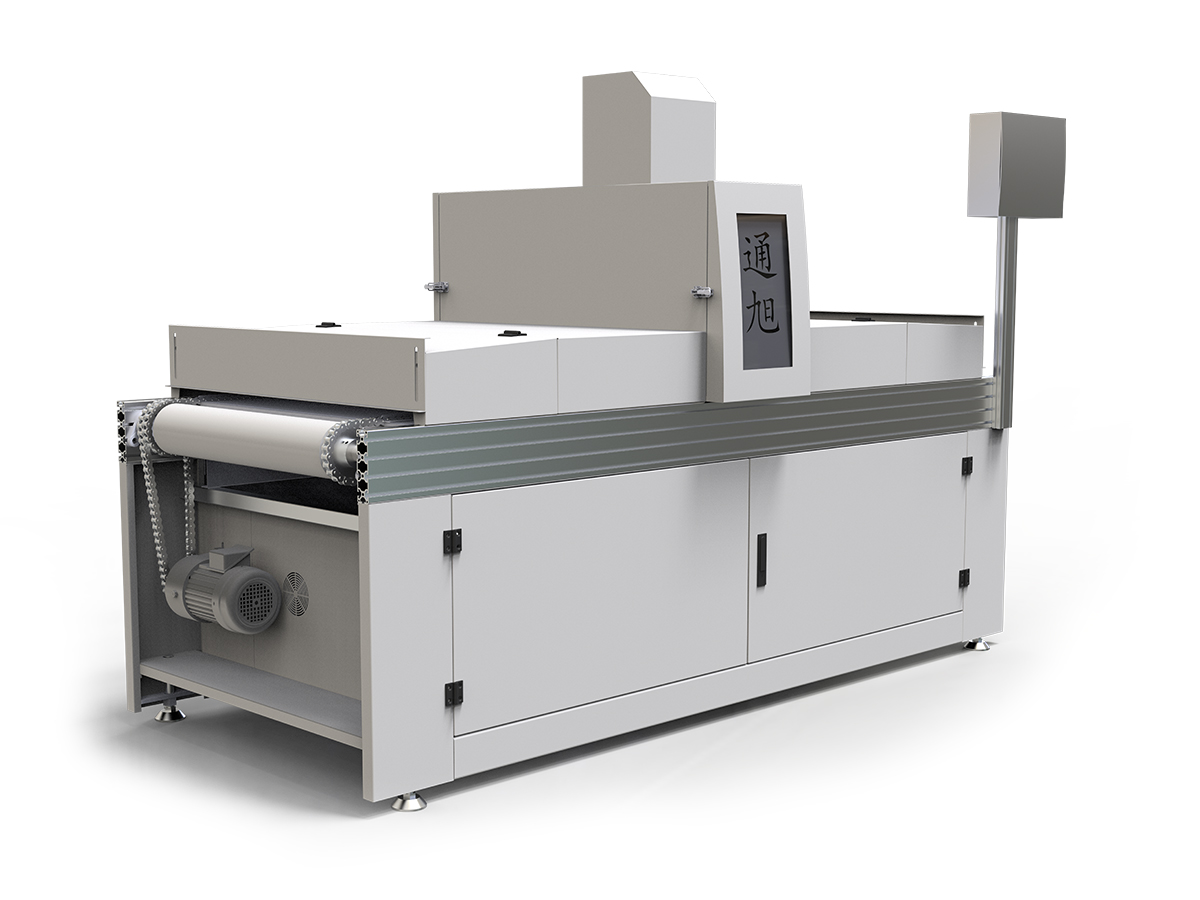
Core Stations in a Coating Production Line
A complete coating production line integrates multiple processing stations, each of which must be specified and matched to the others to avoid bottlenecks, contamination, and quality defects. The following stations represent the standard sequence for both metal and wood substrate lines, with variations noted where the two diverge significantly.
Pre-Treatment and Surface Preparation
For metal substrates, pre-treatment typically involves a multi-stage tunnel washer performing degreasing, phosphating or zirconium conversion coating, and deionized water rinsing before the substrate enters the coating zone. Phosphate conversion coatings improve adhesion by providing a crystalline anchor layer and increase corrosion resistance by passivating the metal surface. Zinc phosphate systems achieve coating weights of 1.5–4.5 g/m² for powder coating applications; iron phosphate systems produce lighter coatings of 0.3–1.0 g/m² suitable for interior parts with lower corrosion requirements. For furniture and wood substrates, pre-treatment stations perform sanding, dust extraction, and in many lines, a UV-activated primer application that seals grain and standardizes surface porosity before topcoat application—critical for achieving consistent gloss and color uniformity across wood species with variable porosity.
Coating Application Equipment
The application station is the defining machine in any surface coating line and is selected based on coating viscosity, required film build, substrate geometry, and transfer efficiency target. The principal application technologies used in industrial surface coating equipment are:
- Electrostatic spray systems — High-voltage (60–100 kV) electrostatic charging of atomized coating particles causes them to be attracted to the grounded workpiece, achieving transfer efficiencies of 85–95% compared to 30–50% for conventional air spray. Rotary bell atomizers—the standard in automotive and high-volume metal coating lines—produce droplet sizes of 15–40 µm and deliver film uniformity of ±1–2 µm across flat and gently curved surfaces.
- Roller coating machines — Used extensively in flat-substrate furniture surface treatment equipment and coil coating lines, roller coaters apply coating directly from a metered applicator roll to the substrate surface at line speeds of 10–120 m/min. Direct roller coating achieves film weights of 3–150 g/m² with tight coat weight control (±2–3%), making it the preferred technology for UV lacquer, UV primer, and water-based sealer application on MDF panels, particleboard, and flat-pressed wood furniture components.
- Curtain coating machines — A falling film of liquid coating is generated across the full width of the substrate as it passes beneath the curtain head on a conveyor. Curtain coaters achieve transfer efficiencies approaching 100% since all coating that misses the substrate is recirculated, and they deliver extremely uniform film builds at high line speeds (up to 200 m/min for low-viscosity coatings). They are standard in high-volume flat furniture panel coating lines and paper laminate operations.
- Powder coating spray booths — Electrostatic powder guns apply thermosetting polyester, epoxy, or hybrid powder at film builds of 60–120 µm in a single pass, with overspray recovered and reused at efficiencies exceeding 95% in reclaim-equipped booths. Powder coating surface treatment machines are the dominant technology for metal furniture, architectural profiles, and heavy fabricated components requiring robust corrosion and impact resistance.
Curing and Drying Equipment
The curing station converts the applied wet or powder coating into a fully cross-linked, mechanically stable film. Curing technology selection is determined by coating chemistry and substrate thermal tolerance. Convection ovens using recirculated hot air at 160–220°C are standard for thermosetting powder coatings on metal substrates, with cure cycles of 10–20 minutes at temperature. UV curing systems—using medium-pressure mercury lamps or LED arrays emitting at 365–405 nm—cure UV-reactive acrylate coatings on wood, paper, and plastics in 0.1–3 seconds, enabling line speeds impossible with thermal curing and eliminating the energy cost of maintaining oven temperatures. UV LED curing systems have largely replaced traditional mercury lamp systems in new furniture surface treatment equipment installations due to their lower energy consumption (60–70% reduction), instant on/off capability, and absence of ozone generation. Infrared (IR) pre-gelling zones are commonly inserted between the powder application booth and the convection oven in powder coating lines to flow and level the powder film before full crosslinking, reducing orange peel and improving gloss.
Furniture surface treatment equipment operates under constraints that distinguish it from general industrial coating machinery. Wood and wood-composite substrates are dimensionally variable, moisture-sensitive, and porous—characteristics that require coating line machinery to be specifically adapted rather than generically applied from metal coating practice.
| Line Type |
Application Method |
Typical Line Speed |
Output Surface Quality |
Best Fit |
| Flat panel UV roller line |
Roller coat + UV cure |
15–40 m/min |
High gloss to matte, Ra <0.1 µm |
Cabinet panels, flat-pack furniture |
| Profile wrapping line |
Adhesive + decorative film lamination |
20–80 m/min |
Film surface quality |
Door frames, skirting boards, moldings |
| Automatic spray + conveyor line |
Reciprocating spray guns + IR/convection dry |
3–12 m/min |
Medium–high, dependent on atomization |
3D furniture parts, chair frames, table legs |
| Vacuum coating line |
Vacuum impregnation + UV cure |
5–20 m/min |
Very high, penetrating finish |
Solid wood flooring, edge profiled panels |
Comparison of furniture surface treatment equipment configurations by application method, speed, and end-use suitability.
A critical design consideration in furniture coating lines is inter-station sanding and dust management. Between sealer and topcoat application passes, automatic wide-belt sanding machines smooth raised grain and coating imperfections. Inline dust extraction using centralized vacuum systems with HEPA filtration is required to prevent airborne particles from contaminating the wet topcoat film—a defect that causes costly rework at high production volumes. Sanding station integration directly affects the achievable surface quality ceiling of the entire line and must be specified concurrently with coating application equipment rather than as an afterthought.
Environmental Compliance in Surface Coating Equipment
Surface coating operations are among the most heavily regulated industrial processes for air quality emissions, primarily due to volatile organic compound (VOC) release from solvent-based coating systems. Modern surface coating machinery must be specified with emissions control infrastructure that satisfies applicable regulatory thresholds—requirements that have tightened substantially across EU, North American, and Chinese markets over the past decade.
- Spray booth airflow and filtration — Downdraft and cross-draft spray booths must maintain face velocities of 0.3–0.5 m/s across the open working area to capture overspray before it escapes to the building environment. Exhaust air passes through fiberglass or paper filter banks achieving particle capture efficiency of ≥98% at 10 µm before discharge or recirculation.
- Thermal oxidizers (TO) and regenerative thermal oxidizers (RTO) — VOC-laden exhaust air from solvent coating lines is directed to oxidizer units that combust organic compounds at 750–950°C. RTOs recover 90–97% of combustion heat through ceramic heat exchange media, substantially reducing the fuel cost of VOC abatement at high exhaust volumes. RTO systems are standard on new solvent-based coating production lines in markets where VOC emission limits require >95% destruction efficiency.
- Waterborne and high-solids coating compatibility — The most direct approach to VOC reduction is reformulating from solvent-based to waterborne or high-solids coatings. Surface coating equipment specified for waterborne systems requires stainless steel or polymer-lined fluid handling components resistant to water and alternative co-solvents, as well as modified drying zone airflow to manage the slower evaporation kinetics of water compared to organic solvents.
- Powder coating's zero-VOC advantage — Powder coating surface treatment machines emit no VOCs during application or curing, and overspray recovery systems return unused powder to the application circuit at recovery rates of 97–99%. For metal substrate applications where powder chemistry can meet performance requirements, powder coating represents the most straightforward path to environmental compliance and should be evaluated against liquid coating alternatives at the line design stage.
Sourcing and Procurement Criteria for Coating Production Line Machinery
Capital investment in coating production line machinery typically ranges from USD 150,000 for a basic flat-panel UV roller line to over USD 5,000,000 for a fully automated automotive-grade multi-stage coating system. The following evaluation criteria determine whether a given line will deliver the production quality, throughput, and operating cost performance required over its intended service life.
- Line speed and annual throughput capacity — Confirm that the specified line speed is achievable simultaneously with the required film build and cure specification—not independently. Some manufacturers specify maximum conveyor speed independently of the application and cure parameters that limit effective production speed in practice.
- Substrate geometry range — Define the minimum and maximum part dimensions—length, width, height, and weight—and confirm that the conveyor, hanging system, and application equipment can accommodate the full range without manual intervention or line reconfiguration.
- Coating chemistry compatibility — Request documentation of materials compatibility for all fluid-contact components: pump seals, hose linings, applicator heads, and storage tanks. Incompatibility between coating chemistry and equipment materials causes premature component failure and coating contamination that is difficult to diagnose after installation.
- Control system and Industry 4.0 integration — Modern surface coating equipment lines use PLC-based control with HMI interfaces that log coating parameters, cure energy, line speed, and film thickness data. Confirm that the control system supports OPC-UA or equivalent data export protocols if integration with factory MES or ERP systems is planned.
- Factory acceptance testing (FAT) and site acceptance testing (SAT) — Require a witnessed FAT at the manufacturer's facility using production-representative substrates and coatings before shipment, followed by a SAT at the installation site after commissioning. Both should be documented with film thickness measurements, gloss readings, adhesion cross-cut results, and line speed verification against the purchase specification.
- Spare parts inventory and service response — Identify the critical-path components—conveyor drive motors, UV lamp modules, pump assemblies, and heat exchanger elements—and confirm that the supplier maintains regional spare parts inventory with guaranteed delivery lead times. A coating line stoppage in a furniture or automotive supply chain environment carries production loss costs that can dwarf the cost of the spare part itself.



 English
 中文简体
中文简体

