Edge band coating equipment applies a continuous, uniform layer of adhesive, primer, lacquer, or functional coating onto edge banding material — the narrow strips of PVC, ABS, melamine, veneer, or acrylic used to finish the exposed edges of panel furniture and cabinetry. The coating line sits upstream of the edge banding press or downstream as a post-process finishing step, and its precision directly determines adhesion quality, surface consistency, and the final visual grade of the banding.
In high-volume panel furniture manufacturing, edge band quality is one of the most visible indicators of product grade. An edge that is poorly coated — uneven adhesive distribution, surface porosity, color inconsistency — signals quality failure regardless of how well the substrate panel was prepared. This is why dedicated coating equipment, rather than manual or inline application, has become standard in mid-to-large scale edge banding production since the early 2000s.
The global edge banding market was valued at approximately $3.2 billion USD in 2023 and is growing at a compound annual rate of around 5.8%, driven by sustained demand from the furniture, kitchen cabinet, and office fitout sectors. Equipment investment tracks this growth: coating line upgrades account for a significant share of edge band production capital expenditure, particularly as manufacturers move toward higher-gloss, textured, and co-extruded banding profiles that require more precise surface treatment.
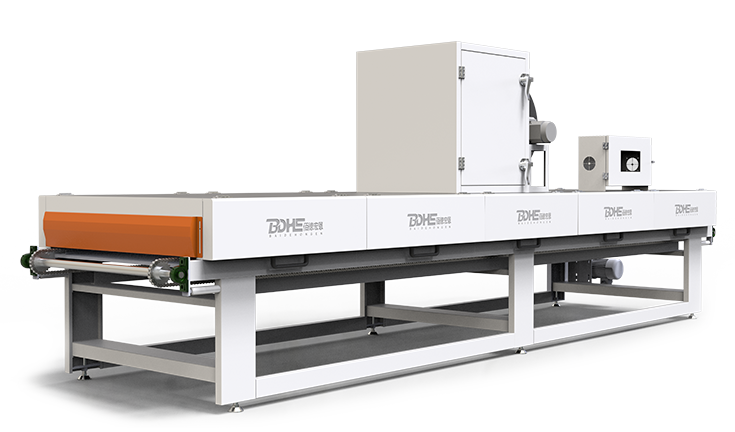
Main Types of Edge Band Coating Equipment
Edge band coating systems are not a single machine category. The correct equipment type depends on the coating material being applied, the substrate, the required output speed, and whether the coating is applied to the face, back, or both surfaces of the banding strip.
Roller Coating Machines
Roller coaters use one or more rotating rubber or steel rolls to transfer a metered film of coating onto the banding surface as it passes through the machine. They are the most widely used format in edge band production due to their high throughput, consistent wet film thickness, and compatibility with a broad range of water-based, solvent-based, and UV-curable coatings. Line speeds in modern roller coating systems for edge banding typically range from 20 to 80 meters per minute, with high-end configurations reaching 120 m/min for thin PVC substrates.
Reverse roller coating — where the applicator roll rotates against the direction of substrate travel — produces a smoother, more leveled film than forward roll application and is preferred for high-gloss and mirror-finish banding products.
UV Coating Lines
UV coating systems apply a photo-initiator-activated lacquer or varnish that cures instantly under ultraviolet lamp exposure rather than through solvent evaporation or heat drying. This eliminates drying tunnel length from the line, reduces energy consumption per linear meter, and produces a harder, more chemically resistant surface than conventional air-dry or oven-cure coatings. UV lines are standard in premium PVC and ABS edge band production where scratch resistance and gloss retention are key selling points.
A typical UV edge band coating line consists of a feeding section, pre-treatment (corona or flame treatment for adhesion promotion on plastic substrates), roller or curtain coater, UV curing lamp bank (typically 80–200 W/cm mercury or LED-UV lamps), and a cooling section before winding. LED-UV systems have largely replaced mercury arc lamps in new installations since 2018 due to lower heat output, longer lamp life (>20,000 hours vs. 1,000–2,000 hours for mercury), and the absence of ozone generation.
Hot Melt Adhesive Back-Coating Machines
A distinct category of edge band coating equipment applies hot melt adhesive (EVA, PUR, or hybrid formulations) to the back surface of the banding strip during production — creating pre-glued edge banding that can be activated at the point of application by heat rather than requiring a separate glue pot at the banding machine. Back-coating lines operate at lower speeds than surface coating lines (typically 10–30 m/min) due to the need for precise adhesive metering and controlled cooling before winding. PUR back-coated edge bands have grown in demand as furniture manufacturers seek stronger bond performance and moisture resistance without the complexity of in-line PUR glue pot management.
Primer and Pre-Treatment Systems
Primer coating equipment applies thin adhesion-promotion layers — typically 2–8 gsm — before the primary decorative or functional coating. On PVC and ABS substrates, primer is often combined with corona discharge treatment, which increases surface energy to above 40 mN/m and ensures the subsequent coating layer bonds without cratering or fisheye defects. Primer systems are frequently integrated as the first station in a multi-pass coating line rather than installed as standalone units.
| Equipment Type |
Primary Application |
Typical Line Speed |
Curing Method |
Best For |
| Roller Coater |
Surface lacquer, primer, color coat |
20–120 m/min |
Air dry / oven / UV |
High-volume PVC, ABS, melamine |
| UV Coating Line |
High-gloss / matte surface finish |
30–80 m/min |
UV lamp (mercury or LED) |
Premium PVC, acrylic banding |
| Hot Melt Back-Coater |
Adhesive back application |
10–30 m/min |
Cooling / solidification |
Pre-glued EVA / PUR bands |
| Primer / Pre-Treatment |
Adhesion promotion |
Inline with primary coat |
Air dry / corona |
Plastic substrates with low surface energy |
Overview of the four main edge band coating equipment types by application, speed, and substrate suitability.
Key Technical Parameters When Specifying Coating Equipment
Selecting the wrong coating equipment for an edge band production line is a costly mistake — both in capital terms and in the downstream quality problems it generates. The following parameters are the ones that most often determine whether a machine is fit for a given application.
Wet Film Thickness Control
The ability to set and hold a precise wet film thickness — typically measured in microns (μm) or grams per square meter (gsm) — is the most fundamental performance criterion. Coating weight variation of more than ±5% across a production run creates visible gloss inconsistency and adhesion variation in the finished banding. Modern servo-driven roller coaters maintain film thickness tolerance within ±2–3% at full production speed; older pneumatic or manual-adjust machines may drift to ±10% or more, particularly during speed changes.
Substrate Width and Thickness Range
Edge banding widths typically range from 19 mm to 100 mm, with 22 mm, 35 mm, and 42 mm being the most common commercial sizes. Coating equipment must accommodate the full width range in the production mix without requiring roll changes or significant re-tooling. Thickness handling — from 0.4 mm thin PVC film banding to 3 mm thick ABS or solid wood strips — requires adjustable nip pressure and entry/exit guide systems that prevent substrate deformation or marking.
Coating Material Compatibility
Roller materials, doctor blade configuration, and pan design must be matched to the coating chemistry. Water-based coatings are compatible with most rubber roll formulations but require stainless steel pans and pump components to prevent corrosion. Solvent-based systems demand solvent-resistant rubber compounds (typically EPDM or Viton) and explosion-proof electrical specifications in the coating zone. UV coatings require UV-opaque enclosures around the pan and roller area to prevent premature cure, which causes rapid viscosity change and coat weight drift.
Drying and Curing Section Length
For solvent and water-based coatings, the drying tunnel length is determined by line speed and the evaporation rate of the coating at the set oven temperature. Undersized drying sections force manufacturers to reduce line speed to compensate, directly cutting output capacity. As a general benchmark, water-based coatings on PVC banding at 60–80 m/min require approximately 8–12 meters of oven length at 60–80°C with sufficient airflow to carry away solvent vapor. UV lines eliminate this constraint but introduce UV lamp thermal management as a replacement concern.
Tension and Web Control
Edge banding is a narrow, often thin substrate that is susceptible to lateral wander and longitudinal tension variation as it passes through a coating line. Without active tension control — dancer rolls, load-cell-based servo unwinders, or closed-loop web guides — the coating zone receives substrate at varying speeds and angles, producing streak patterns and edge coating dropout. This is a particularly common problem with thin (0.4–0.8 mm) PVC banding at speeds above 40 m/min.
Inline vs. Offline Coating: Which Configuration Fits Which Operation
Edge band coating equipment is deployed in two fundamentally different configurations — inline as part of the extrusion or printing line, or offline as a standalone post-process. The choice has significant implications for flexibility, capital cost, and production scheduling.
Inline coating integrates the coating station directly into the edge band extrusion or printing line, applying the surface treatment before the banding is wound onto the output roll. This eliminates a separate handling step and reduces the risk of surface contamination between production and coating. The constraint is that the coating line speed must be synchronized with the upstream extrusion or printing speed — if they are mismatched, either the coating quality suffers or the extrusion rate must be throttled. Inline systems are most cost-effective when the product mix is narrow and production runs are long.
Offline coating operates as a separate process, typically taking wound rolls of uncoated banding from storage and running them through a dedicated coating line. This decouples coating throughput from extrusion throughput, allows multiple substrate types to be coated on the same machine with changeovers between runs, and enables coating as a value-adding service for third-party banding manufacturers. Offline lines require more floor space and an additional handling step but offer significantly more operational flexibility. Most dedicated edge band coating operations — particularly in China, Germany, and Italy where coating is frequently a contracted service — use offline configurations.
Emerging Trends: Digital Printing Integration and Eco-Coating Formulations
Two developments are reshaping edge band coating equipment requirements in the current market cycle.
The first is the integration of digital inkjet printing with coating lines. As digitally printed edge banding — where the decor pattern is applied by inkjet rather than gravure or rotogravure printing — moves from niche to mainstream, coating equipment must be adapted to work with digital ink systems. Digital inks require specific primer formulations to achieve dot gain control and color density on plastic substrates, and the UV top coat applied after printing must be optically clear and non-yellowing to maintain color fidelity over the product's service life. This has driven demand for UV LED coating stations tuned specifically for post-digital-print applications.
The second trend is the shift toward low-VOC and water-based coating formulations in response to tightening environmental regulation in the EU, China (GB/T standards), and increasingly in North America. Water-based UV coatings — which combine the low-solvent advantages of water-based chemistry with the instant cure of UV — are now commercially viable for edge band applications and are being specified in new coating line installations where solvent-based systems would previously have been the default. Equipment manufacturers are responding with stainless steel wet sections, improved oven airflow systems, and UV lamp configurations optimized for the higher water content and different photo-initiator chemistry of these formulations.



 English
 中文简体
中文简体

