An edge banding printing machine applies decorative patterns, wood-grain textures, solid colors, or custom graphics directly onto edge banding tape before or during the furniture manufacturing process. Rather than sourcing pre-printed rolls from a supplier, manufacturers use these machines to print in-house — giving them precise control over color matching, pattern registration, and material compatibility.
The core function is to transfer ink or pigment onto PVC, ABS, acrylic, wood veneer, or melamine edge tape with high repeatability at production speeds. Modern systems integrate with edge banding lines, receiving substrate from an unwind station, printing in one or multiple passes, and feeding directly into the banding applicator. Standalone offline units also exist for pre-printing large tape inventories.
The key distinction from standard industrial printers is substrate handling. Edge banding tape is narrow — typically 19 mm to 100 mm wide — and arrives in rolls of 50 m to 500 m. Machines must maintain precise tension, avoid stretching flexible PVC, and achieve consistent print alignment across the entire roll length.
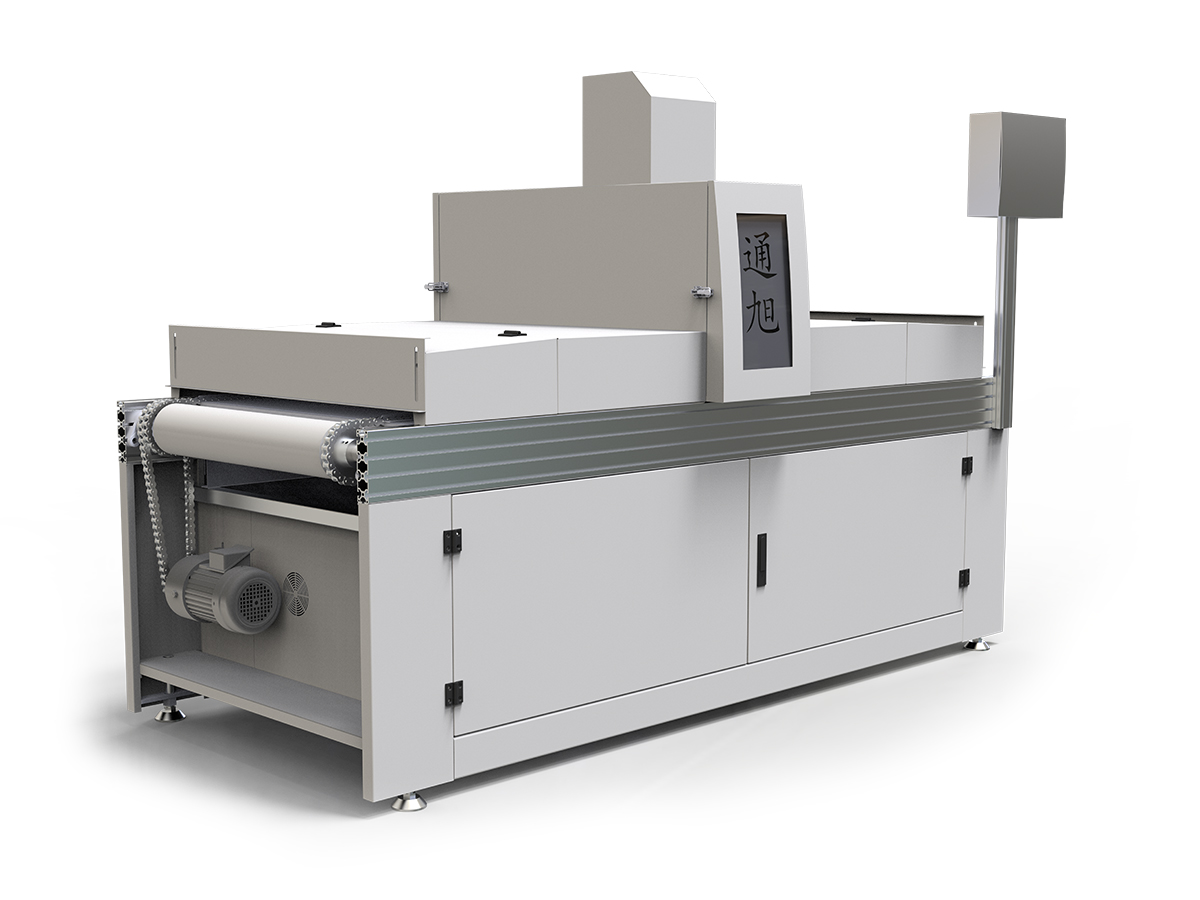
Printing Technologies Used in Edge Banding Production
Three main technologies dominate the edge banding printing segment, each with different implications for run length, color range, and substrate compatibility.
Gravure Printing
Rotogravure remains the standard for high-volume edge banding production. Engraved cylinders transfer solvent-based inks with exceptional consistency across millions of linear meters. Setup costs are high — cylinder engraving alone can cost $800–$2,500 per color — but per-meter production costs drop sharply above 50,000 m runs. Gravure is particularly well-suited for photorealistic wood-grain simulation, where tonal gradation and fine detail matter.
Flexographic Printing
Flexo printing uses flexible photopolymer plates and is better suited to mid-volume runs. Plate costs are lower than gravure cylinders, and changeovers are faster — typically under 30 minutes versus several hours. Print quality for solid colors and repeating patterns is excellent, though flexo has limitations in fine shadow gradients compared to gravure. Water-based and UV-curable inks are widely available for flexo systems, supporting stricter VOC regulations in European and North American markets.
Digital Inkjet Printing
Digital inkjet has gained significant market share in edge banding printing since 2015. Machines from manufacturers such as Hymmen, Cefla, and Barberan use industrial piezoelectric printheads to jet UV-curable or water-based inks directly onto tape at speeds of 50–200 m/min. There are no plates or cylinders to prepare, making digital the only viable choice for short runs, custom orders, or design prototyping. Color matching is software-driven, enabling same-day changes without physical tooling. The limitation is per-meter cost at very high volumes, where gravure still has an economic advantage.
| Technology |
Ideal Run Length |
Setup Cost |
Print Speed |
Changeover Time |
| Gravure |
50,000 m+ |
High |
200–400 m/min |
2–4 hours |
| Flexographic |
5,000–50,000 m |
Medium |
100–250 m/min |
20–45 min |
| Digital Inkjet |
1 m–5,000 m |
Low (no plates) |
50–200 m/min |
<5 min |
Comparison of printing technologies commonly applied in edge banding tape production.
Key Machine Specifications to Evaluate
Selecting an edge banding printing machine requires matching specifications to production requirements rather than defaulting to the highest-performance model. The following parameters have the most practical impact on output quality and operational efficiency.
- Print width range: Most machines cover 19 mm to 100 mm, but some digital systems support up to 150 mm for wide banding formats used in commercial furniture.
- Resolution: For wood-grain simulation, 720–1440 dpi is standard in digital systems. Gravure achieves comparable visual results through cell geometry rather than dpi specifications.
- Color stations: Four-color CMYK is the baseline; six- and eight-color configurations add extended gamut capability, important for matching Pantone specifications used by large retail furniture brands.
- Ink system: UV-curable inks require integrated UV curing lamps and generate near-zero VOCs. Solvent-based inks offer stronger adhesion on non-treated PVC but require exhaust systems and solvent recovery equipment.
- Tension control: Servo-driven unwind and rewind systems with closed-loop tension feedback maintain consistent substrate speed, which directly affects color-to-color registration accuracy — typically specified as ±0.1 mm or better on premium machines.
- Inline coating options: Some configurations include a primer or top-coat unit before or after the print station, which improves ink adhesion on difficult substrates and adds abrasion resistance without a secondary pass.
Integration with Edge Banding Lines and Industry 4.0 Workflows
The trend in modern furniture plants is toward inline printing — integrating the printing unit directly into the edge banding application line rather than treating it as a separate offline process. This eliminates the inventory buffer of pre-printed tape rolls and enables on-demand pattern switching, which is essential for batch-size-one production strategies increasingly adopted by European panel furniture manufacturers.
Inline digital printing systems communicate with the edge banding machine's PLC to synchronize print triggers with panel cutting sequences. When a new panel design is called by the CNC or cutting optimization software, the print controller adjusts the pattern before the tape reaches the banding head. This synchronization eliminates manual tape changes and reduces scrap from mismatched banding.
Several machine builders now offer cloud-connected print management software that tracks ink consumption, head health, and job history. Integration with ERP and MES systems allows automatic job queuing based on production schedules, with print parameters stored per SKU and recalled without operator input. For high-mix, low-volume furniture lines, this capability reduces setup errors and supports traceability requirements in quality-certified supply chains.
Substrate Compatibility and Ink Adhesion Challenges
Edge banding printing machines must handle a wider range of substrate chemistries than most narrow-web printing applications. PVC is the dominant material, but ABS, polypropylene, acrylic, and wood veneer tapes each present distinct surface energy characteristics that affect ink wetting and adhesion.
PVC has relatively low surface energy — typically 38–42 mN/m — which makes adhesion straightforward with solvent-based or UV inks containing appropriate adhesion promoters. ABS and PP have even lower surface energy and usually require corona or plasma treatment before printing to bring surface energy above 44 mN/m. Many machines include integrated corona treaters immediately upstream of the first print station to handle mixed substrate workflows without manual changeover.
Wood veneer tape presents a different challenge: porosity and moisture content variation cause ink absorption inconsistencies. Machines printing on veneer typically use a primer station with fast-drying basecoat to normalize the surface before color printing. Hot-air or IR drying between stations is preferred over UV curing on natural wood substrates to avoid yellowing from photoinitiator residue.
Abrasion resistance of the finished print is a functional requirement, not just an aesthetic one. Edge banding on cabinet doors, drawer fronts, and tabletops sees continuous mechanical contact. Ink systems designed for edge banding typically incorporate crosslinked topcoat layers or are overprinted with a UV-cured protective varnish, achieving pencil hardness ratings of 2H–4H and passing Taber abrasion tests at 500 cycles with minimal color loss.
Leading Manufacturers and Market Landscape
The edge banding printing machine market is concentrated among a relatively small number of specialized suppliers, with the broadest selection in the digital segment where the technology has attracted new entrants since 2015.
- Hymmen (Germany): One of the most recognized names in digital surface printing, offering inline UV inkjet systems specifically configured for narrow-web edge banding substrates.
- Cefla Finishing (Italy): Offers digital printing systems integrated with their broader furniture finishing line portfolio, including primer and topcoat stations.
- Barberan (Spain): Produces high-speed digital printing machines for flat panel and edge banding applications, with installations across Europe, Asia, and South America.
- Chinese manufacturers: A growing number of domestic Chinese builders supply gravure and flexo edge banding printing lines at significantly lower capital cost, primarily targeting the large-scale panel furniture sector in Guangdong and Zhejiang provinces.
Pricing varies widely: entry-level offline digital units start around $80,000–$120,000 USD, while fully integrated inline digital lines with multi-station color and coating capability reach $400,000–$800,000. Gravure lines at comparable throughput typically fall in the $300,000–$600,000 range, with cylinder inventory representing a significant ongoing cost.



 English
 中文简体
中文简体

