The most effective surface treatment machine for preparing steel before painting is an automatic shot blasting system that achieves a cleanliness level of Sa 2.5 according to ISO 8501-1 and produces a controlled anchor profile of 40 to 75 microns. This level of surface preparation ensures that a subsequently applied two-component epoxy coating will survive a 1,500-hour salt spray test without underfilm corrosion, directly translating to a structure that requires repainting only every 15 to 20 years instead of every 5 years.
A surface treatment machine is any power-driven equipment that removes rust, mill scale, old coatings, and other contaminants from a metal substrate and imparts the specific roughness required for a new coating system to adhere. The machine does not apply paint. Its sole purpose is to create a chemically clean, physically rough surface that paint can bond to mechanically. Without a properly treated surface, even the most expensive coating system will fail because the paint film will peel away from the underlying metal as corrosion propagates invisibly beneath it.
In a typical industrial painting line, the surface treatment machine sits directly upstream of the paint application equipment. Steel profiles, plates, or fabricated parts enter the machine covered in mill scale and light rust. They exit with a uniform, matte gray finish that is immediately ready for primer. The time from surface preparation to primer application should not exceed 4 hours in an uncontrolled environment to prevent the formation of flash rust, which negates the benefit of the treatment.
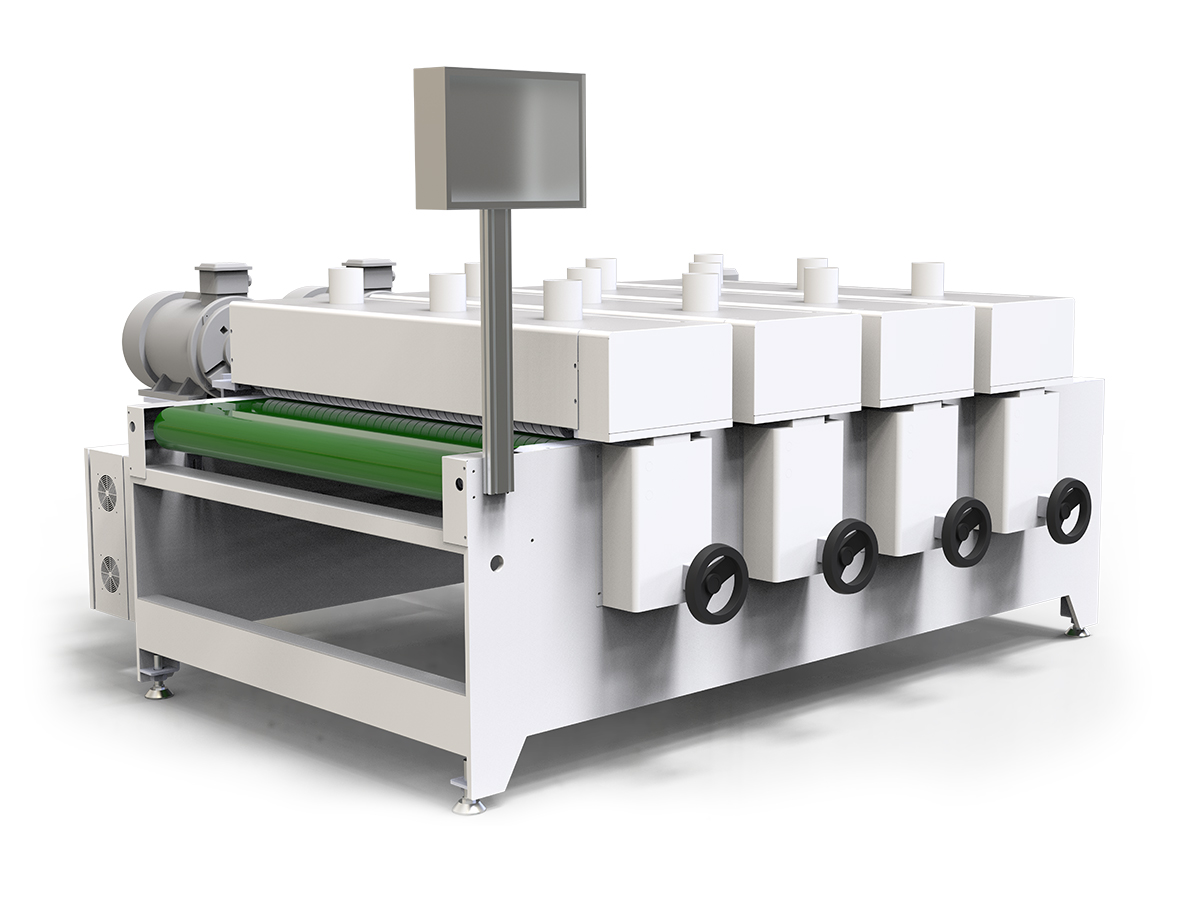
Types of Surface Treatment Machines and Their Performance Envelope
Not all surface treatment machines produce the same result. The choice between abrasive blasting, shot blasting, and chemical pretreatment depends on the production volume, the geometry of the parts, and the coating system that will follow. The table below compares the three most common technologies.
| Technology |
Typical Cleaning Standard Achieved |
Anchor Profile Range |
Best Application |
| Automatic Shot Blasting |
Sa 2.5 (Near White Metal) |
40 to 75 microns |
Steel plates, profiles, fabricated sections |
| Manual Sandblasting |
Sa 2 to Sa 3 |
25 to 100 microns |
Complex geometries, repair work |
| Chemical Pretreatment Line |
Cleans and phosphates |
Minimal roughness |
Sheet metal, powder coating lines |
Performance comparison of surface treatment machine types based on commonly specified coating preparation requirements.
An automatic shot blasting surface treatment machine is the preferred choice for high-volume structural steel fabrication. It uses a turbine to propel steel shot or grit onto the workpiece at speeds up to 80 meters per second, achieving a uniform finish across the entire surface. The spent abrasive is recycled within the machine through an air wash separator that removes dust and broken abrasive particles, ensuring that the media impacting the steel is always of the correct size and shape. This closed-loop media management keeps operating costs at approximately 15 to 20 cents per square meter of cleaned surface, roughly one-third the cost of equivalent open-air sandblasting.
Abrasive Media Selection and the Created Anchor Profile
The media used inside a surface treatment machine directly determines the anchor profile depth, which is the microscopic roughness that paint grips onto. An anchor profile that is too shallow will cause the coating to delaminate under thermal expansion, while a profile that is too deep will leave peaks that protrude through the paint film and become initiation points for corrosion. The standard requirement for a two-component epoxy paint system is a profile of 40 to 75 microns, measured using a replica tape and spring micrometer per ASTM D4417.
Steel shot produces a rounded, peened surface with a profile toward the lower end of the range. It is preferred when the paint system is relatively thin and the coating must flow smoothly. Steel grit produces a sharp, angular profile with a depth that can exceed 100 microns, making it the choice for thick, high-build coatings like those used on offshore platforms. A surface treatment machine that can blend shot and grit in a customer-defined ratio gives the operator complete control over the final surface roughness, allowing a single machine to prepare steel for both an 80-micron thin film zinc-rich primer and a 400-micron solvent-free epoxy coating.
Automation and Throughput in a Modern Surface Treatment Machine
A manually operated surface treatment machine is limited by the speed of an operator. An automatic roller conveyor shot blaster, on the other hand, processes steel plates and sections at a feed rate of 2 to 6 meters per minute, translating to a throughput of over 1,000 square meters per shift. The machine positions multiple blast turbines at precise angles around the workpiece, ensuring that every surface is impacted by abrasive, including the internal corners of I-beams and channel sections that a manual operator would miss.
The blasting chamber of a production-grade surface treatment machine is lined with replaceable manganese steel wear plates. The turbine blades, which spin at 2,500 to 3,000 rpm, are cast from high-chrome alloy and have a service life of 600 to 800 hours under continuous operation before they must be replaced. The dust collector attached to the machine must extract 8,000 to 12,000 cubic meters of air per hour to maintain a negative pressure inside the blast chamber that prevents abrasive dust from escaping into the workshop.
Integration with Painting Lines and Just-in-Time Surface Preparation
A surface treatment machine is most effective when it is directly integrated with the painting booth through a common roller conveyor. The steel exits the blast machine clean and warm, at a temperature approximately 5 to 8 degrees C above ambient due to the friction of the blasting process. This slight temperature elevation helps the first coat of paint wet the surface more effectively and begin curing immediately. If the steel is allowed to cool to ambient temperature and sit exposed for more than 4 hours, a flash rust layer forms that reduces the coating adhesion by up to 30 percent.
In a fully integrated line, the steel passes from the blast machine through a blow-off station that removes residual dust, then directly into the paint spray booth. The entire cycle from rusty steel to primed, painted, and oven-cured takes less than 90 minutes. This just-in-time approach eliminates the need for interim storage of prepared steel and the associated risk of recontamination.
Maintenance That Keeps a Surface Treatment Machine Operating Reliably
A surface treatment machine is a severe-duty piece of equipment. The abrasive that cleans the steel also wears the machine. A disciplined maintenance schedule is the only way to keep the machine producing a consistent finish and to prevent unplanned downtime. The critical maintenance tasks and their frequencies are as follows.
- Daily: Empty the dust collection hopper and inspect the abrasive recycling system for screen blockages. Check the blast pattern on a test plate to identify any turbine that has lost alignment.
- Weekly: Measure the depth of wear on all manganese steel liners. Replace any liner that has worn to less than 30 percent of its original thickness.
- Monthly: Remove and balance the blast turbines. An unbalanced turbine vibrates at a frequency that can crack the shaft housing, a repair that costs over 5,000 dollars and takes the machine offline for a full week.
- Annually: Replace all door seals and inspect the dust collector filter bags for pinholes. Bags with pinholes emit fine respirable dust that is a health hazard and that settles on freshly painted surfaces, causing unacceptable finish defects.
Safety Systems Built into a Production-Grade Surface Treatment Machine
A surface treatment machine operating at full capacity contains high-speed projectiles, high-voltage motors, and a potentially explosive dust-air mixture. The safety systems integrated into the machine are not optional extras. The blast chamber must be equipped with an interlock that immediately cuts power to all turbines if any access door is opened. The dust collector must have an explosion relief panel sized to vent a pressure of 0.5 bar in the event of a dust explosion. The control panel must include an emergency stop circuit that, when activated, stops the turbines and the conveyor within 2 seconds and applies a mechanical brake to prevent workpieces from rolling free.
The operator of a surface treatment machine must wear hearing protection rated for a continuous noise level of 95 to 105 dB(A), as the combined noise of the turbines, the media impact, and the dust collector blower exceeds safe limits. A properly maintained machine with all acoustic enclosures closed will keep the operator zone noise below 85 dB(A), which is the threshold at which occupational hearing loss begins to occur with prolonged exposure.
Selecting the Right Surface Treatment Machine for a Production Facility
The decision to purchase a surface treatment machine should be based on a careful analysis of the incoming steel condition, the required throughput, and the coating specification that must be met. The key variables to define before approaching a machine supplier are the maximum width and height of the workpieces, the required conveyor speed, the target cleanliness level, and the anchor profile depth. A machine that is sized correctly will operate at 70 to 80 percent of its maximum throughput, leaving reserve capacity for peak periods without running the abrasive recycling system beyond its design limit. A machine that is undersized will force operators to slow the conveyor below the minimum speed that the blast turbines can effectively clean, producing an inconsistent surface that will fail a coating adhesion test.



 English
 中文简体
中文简体

