An edge banding printing machine applies decorative patterns, wood grain textures, solid colours, or custom graphics directly onto the surface of edge banding tape — the narrow strip of PVC, ABS, melamine, or veneer material bonded to the exposed edges of panel furniture, cabinetry, and worktops. The printing step is what converts a plain extruded or coated tape into a visually matched, furniture-grade edge that aligns with the decor of the panel face, making it indistinguishable from the panel surface in finished pieces.
Without an in-line or dedicated edge banding printer, manufacturers are dependent on pre-printed stock rolls sourced from tape suppliers — a supply chain model that restricts colour and pattern flexibility, ties up working capital in large minimum-order quantities, and prevents rapid response to custom orders. Bringing edge banding printing in-house with a dedicated machine resolves all three constraints simultaneously, making it a strategically significant investment for medium- to large-scale furniture manufacturers and edge banding tape producers serving custom and short-run markets.
Printing Technologies Used in Edge Banding Printing Machines
Three principal printing technologies are applied to edge banding production, each with distinct trade-offs in print quality, run length economics, substrate compatibility, and capital cost:
Gravure Printing
Rotogravure is the traditional high-volume process for edge banding decoration. Engraved chromium-plated copper cylinders transfer ink directly onto the tape substrate at speeds of 100–300 m/min, producing sharp, consistent wood grain patterns with excellent colour-to-colour registration across multi-million-metre production runs. Gravure delivers the lowest ink cost per metre at volume and is the standard process for large tape manufacturers supplying commodity decors. The constraint is economic: cylinder engraving costs USD 500–2,000 per colour per design, making gravure uneconomical for runs below approximately 50,000–100,000 metres per design.
Flexographic Printing
Flexo printing uses photopolymer relief plates mounted on impression cylinders to transfer UV-curable or solvent inks onto edge banding at speeds of 50–200 m/min. Plate costs (USD 150–600 per colour) are substantially lower than gravure cylinders, bringing the break-even run length down to 10,000–30,000 metres. Flexo is the preferred process for mid-volume edge banding printers offering a library of 50–200 active decors, where the plate investment amortizes efficiently across repeat orders. Print quality for wood grain textures is slightly below gravure but indistinguishable in finished furniture at normal viewing distances when using high-resolution photopolymer plates (1,000–2,400 dpi equivalent).
Digital Inkjet Printing
UV inkjet edge banding printing machines use fixed piezoelectric printhead arrays — commonly Ricoh Gen5, Kyocera KJ4B, or Seiko Epson printheads — to jet UV-curable inks directly onto the tape surface without any printing plates or cylinders. This eliminates tooling costs entirely, enabling economical printing from a single metre upward. Production speeds for industrial digital edge banding printers range from 15–80 m/min, making them slower than gravure or flexo at volume but competitive for short-run and custom work. Digital printing has fundamentally changed the economics of custom edge banding: a furniture manufacturer can now produce 50 metres of a custom wood grain matched to a specific panel decor in under 30 minutes, at a cost per metre that would have been prohibitive with plate-based processes five years ago.
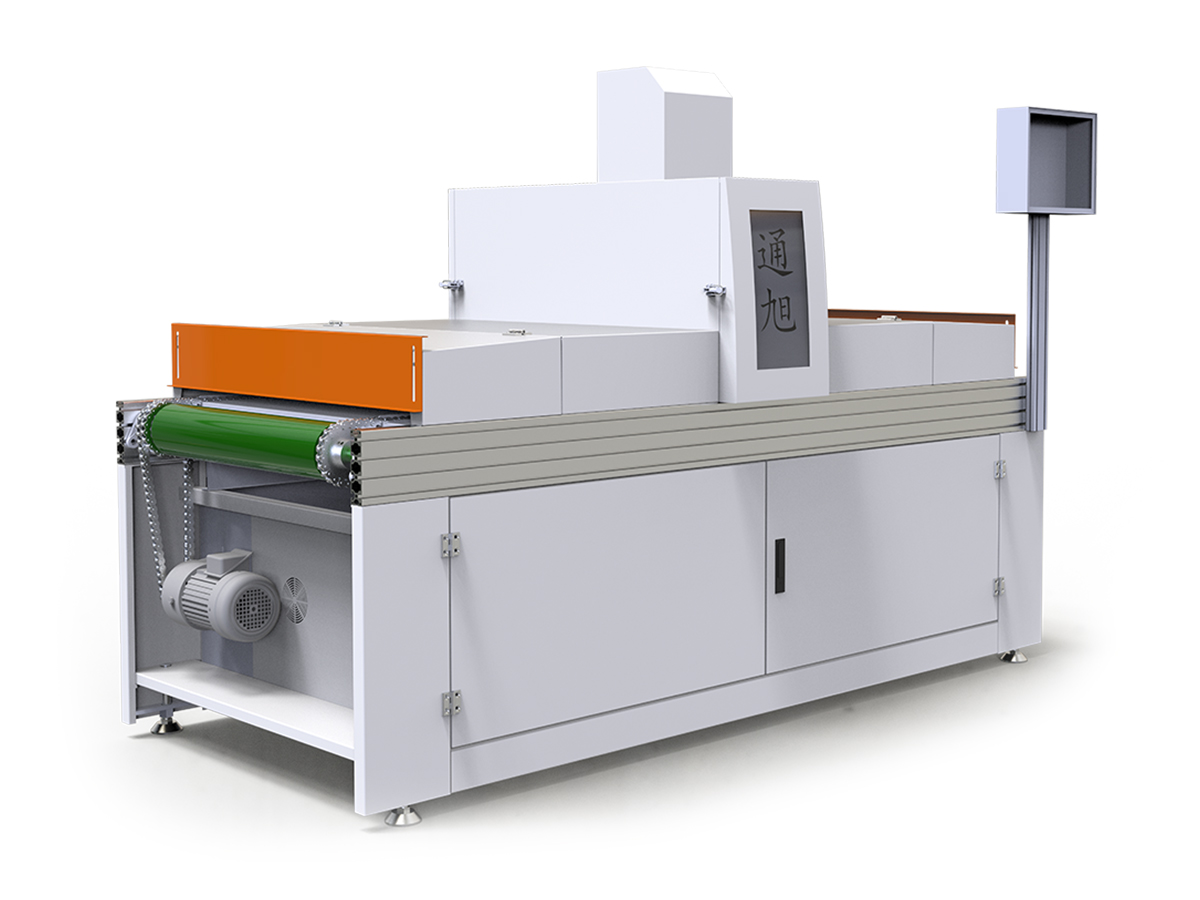
Gravure vs. Flexo vs. Digital: Choosing the Right Technology
The optimal printing technology for an edge banding operation depends on run length distribution, decor variety, and whether the business model is high-volume commodity production or custom short-run service. The comparison below covers the parameters most relevant to a capital investment decision.
| Parameter |
Gravure |
Flexographic |
Digital Inkjet |
| Print speed |
100–300 m/min |
50–200 m/min |
15–80 m/min |
| Tooling cost per design |
USD 2,000–8,000 |
USD 500–2,400 |
Zero |
| Economic min. run length |
50,000–100,000 m |
10,000–30,000 m |
1 m+ |
| Ink cost per metre (relative) |
Low |
Medium |
High |
| Design changeover time |
30–90 min |
15–45 min |
<2 min (file-based) |
| Substrate range |
PVC, ABS, PP |
PVC, ABS, melamine |
PVC, ABS, veneer, paper |
| Capital cost range |
USD 300K–1.5M+ |
USD 80K–400K |
USD 40K–250K |
Comparative overview of gravure, flexographic, and digital inkjet printing technologies for edge banding production.
Many edge banding manufacturers now operate hybrid configurations: a gravure or flexo line for high-volume core decors running continuously, supplemented by a digital inkjet machine for custom orders, colour matching, and new design sampling — capturing the economics of both processes across their respective run length ranges.
Key Machine Components and Inline Process Stages
A production-grade edge banding printing machine integrates multiple process stations into a single pass, taking bare tape from the unwind reel to printed, lacquered, and rewound finished product. The main inline stages are:
- Substrate pre-treatment: Corona discharge or plasma treatment at 10–60 W·min/m² increases the surface energy of PVC and ABS from a typically low 32–36 mN/m to above 44 mN/m, ensuring adequate ink adhesion without primer. For paper-based tapes, pre-coating with a UV primer may be applied inline instead.
- Base coat application: A white or tinted base coat is applied by anilox roller or inkjet before the decorative print layers to provide opacity and a consistent colour foundation, particularly critical when printing light wood grain textures over natural PVC grey or brown substrate colour.
- Printing station(s): One to eight colour stations depending on technology. Gravure and flexo machines use sequential impression units with inter-station UV or hot-air drying; digital machines use a single fixed printhead array covering the full tape width in a single pass.
- UV curing: LED-UV or mercury-arc UV lamps cure ink layers immediately after each print station (digital) or after the final colour unit (flexo/gravure), fixing the image before the lacquer station. LED-UV is increasingly preferred for lower heat output — critical for thermoplastic substrates that distort under conventional mercury lamp heat load.
- Surface lacquer application: A clear protective topcoat — matte, satin, or gloss — is applied over the printed decoration to provide scratch resistance, chemical resistance, and the surface texture that distinguishes furniture-grade tape from uncoated printed stock. Lacquer gloss level is typically specified at 2–5 GU (matte), 15–30 GU (satin), or 60–80 GU (gloss) measured at 60°.
- Tension control and rewinding: Closed-loop dancer-roller tension control maintains consistent tape tension throughout the machine to prevent stretching or registration drift, particularly critical on narrow tapes (19 mm, 22 mm) where lateral tension variation causes print width instability.
Substrate Compatibility: Which Tapes Can Be Printed
Edge banding tape used in furniture manufacture spans a wide range of substrates, and not all are compatible with every printing process. Understanding substrate requirements upfront determines which machine configuration and ink chemistry is appropriate:
- PVC edge banding (0.4–3.0 mm thick): The dominant substrate in volume terms. PVC is compatible with all three printing technologies using UV-curable or solvent-based inks. Plasticizer migration from flexible PVC formulations can degrade adhesion over time if incompatible ink systems are used — ink suppliers must confirm plasticizer resistance of the selected ink set.
- ABS edge banding: ABS offers higher impact resistance and better heat stability than PVC, increasingly specified for kitchen and bathroom furniture. ABS requires higher corona treatment intensity than PVC (surface energy target ≥46 mN/m) and benefits from ABS-specific primer systems in gravure and flexo applications.
- PP (polypropylene) edge banding: PP is chemically inert and difficult to print without aggressive surface activation. Flame treatment or high-intensity plasma is typically required, and ink adhesion cross-hatch testing per EN ISO 2409 must confirm ≥4B adhesion before production approval.
- Melamine and paper tapes: Pre-impregnated or plain paper tapes are primarily printed by gravure or flexo during the paper manufacturing stage, but digital inkjet post-printing of melamine tape is technically feasible with water-based or UV inks, enabling custom decor on pre-manufactured melamine stock.
- Wood veneer tape: Veneer presents an uneven, porous surface incompatible with conventional gravure or flexo printing. Digital inkjet with variable drop size (2–35 pL) compensates for surface texture variation and is the only practical print technology for decorating or colour-enhancing raw veneer tape inline.
Specification Checklist for Sourcing an Edge Banding Printing Machine
Buyers evaluating edge banding printing machine proposals should align technical specifications with production requirements before comparing price points. The following parameters define machine capability in practice:
- Maximum tape width and thickness range: Confirm the machine accommodates your full product range — from 19 mm narrow tape to 150 mm or 210 mm wide post-forming strips — without requiring separate setups or tooling changes. Thickness range should cover your thinnest (0.4 mm) and thickest (3.0 mm or more for solid wood substitute products) substrates.
- Print resolution and colour gamut: For digital machines, printhead native resolution (typically 600–1,200 dpi) and the colour gamut achievable with the installed ink set (CMYK, CMYK+W, or extended gamut) determine how accurately the printed decor can match a target panel décor. Request printed samples on your actual substrate before purchase.
- Curing system type and substrate temperature: Verify that the UV curing system (LED-UV or mercury arc) does not raise substrate surface temperature above the tape's safe processing limit — typically 60–70°C for flexible PVC, 80–90°C for ABS. Excessive substrate heating causes dimensional instability and edge curl in finished rolls.
- Colour management system integration: Production-grade digital edge banding printers should support ICC profile-based colour management with spectrophotometric inline feedback, enabling ΔE colour accuracy of ≤1.5 against defined targets. This is the technical standard required for reliable matching to panel decors from major board suppliers.
- Unwind/rewind reel capacity: Larger reel capacity (300–600 mm core diameter) reduces the frequency of roll changes, improving effective production uptime. For gravure and flexo lines, automatic splicers with zero-speed or flying splice capability eliminate downtime at roll change entirely.
- After-sales support and spare printhead availability: For digital machines, printhead replacement cost (USD 800–3,500 per head depending on model) and availability in your region is a material ongoing cost. Confirm that the machine supplier maintains regional stock of printheads and that the printhead model is not a proprietary variant restricted to a single source.
Lead times for industrial edge banding printing machines from European and Chinese manufacturers typically run 8–20 weeks for standard configurations, extending to 24–36 weeks for custom-specification gravure lines. Factory acceptance testing (FAT) at the supplier's facility before shipment — using the buyer's own substrate and target decors — is strongly recommended to confirm colour performance and throughput claims before delivery.



 English
 中文简体
中文简体

