The Foundational Role of Surface Preparation
In the realm of industrial manufacturing, the performance of a coating, adhesive, or any surface-bound material is not solely determined by its intrinsic properties. Its success is fundamentally predicated on the condition of the substrate it is applied to. This is where the critical, yet often undervalued, process facilitated by a surface treatment machine comes into play. Achieving superior adhesion and flawless coating quality is a scientific endeavor that begins long before the first droplet of paint or layer of adhesive is deployed. It commences with the meticulous engineering of the substrate's surface at a microscopic level. A surface treatment machine is the cornerstone of this engineering process, systematically transforming an unprepared, often contaminated surface into an optimally receptive canvas. The consequences of neglecting this step are severe and costly, manifesting as peeling paint, delaminating composites, failed bonds, and premature product degradation. These failures are rarely attributable to the coating material itself but are instead symptoms of poor surface energy, inadequate roughness for mechanical interlocking, or the presence of invisible barriers like oils, oxides, or release agents. Therefore, understanding and implementing precise surface treatment is not merely a preparatory step; it is the decisive factor that dictates the longevity, reliability, and quality of the final product. This article delves into the mechanisms through which modern surface treatment machines orchestrate this transformation, ensuring that industrial applications meet the highest standards of performance and durability.
Mechanisms of Adhesion Enhancement
Adhesion is the complex interplay of physical and chemical forces that bind a coating to a substrate. A surface treatment machine enhances these forces through several targeted mechanisms, each addressing specific adhesion challenges.
Increasing Surface Energy for Improved Wetting
One of the primary barriers to good adhesion is poor wetting. When a liquid coating is applied to a surface with low surface energy, it tends to bead up rather than spread out evenly, creating weak spots and poor contact. A surface treatment machine, particularly those utilizing plasma or corona discharge, bombards the surface with energetic ions and electrons. This process effectively cleans the surface at a molecular level and introduces polar functional groups (such as -OH, -COOH, or -NH2). These groups dramatically increase the surface energy of the substrate. A higher surface energy allows the coating, which typically has a lower surface tension, to spread completely and intimately across the substrate, maximizing the contact area—a prerequisite for strong adhesion. This is especially crucial for low-surface-energy polymers like polyethylene, polypropylene, and PTFE, which are notoriously difficult to bond or coat without such treatment. The transformation can be quantified by measuring the contact angle of a water droplet before and after treatment; a significant reduction in the contact angle visually demonstrates the improved wettability achieved by the machine.
Creating Micro-Roughness for Mechanical Interlocking
Beyond chemical bonding, physical anchoring is a powerful adhesion mechanism. A perfectly smooth surface offers little for a coating to grip onto. Automated abrasive blasting systems for uniform surface profile are engineered to solve this exact problem. These machines propel a controlled stream of abrasive media (such as aluminum oxide, glass beads, or plastic grit) at the substrate. The impact removes contaminants and, more importantly, creates a specific, consistent micro-rough surface profile. This topography is not about creating deep gouges, but a uniform pattern of peaks and valleys at a microscopic scale. When a coating is applied, it flows into these microscopic valleys and solidifies, forming a multitude of tiny mechanical anchors or "teeth." This interlocking significantly increases the bond strength by distributing stress over a vast area and preventing the coating from being peeled away in a single, smooth plane. The key here is uniformity; manual blasting can lead to an inconsistent profile, causing weak points. An automated system ensures every square inch of the part receives the identical level of abrasion, guaranteeing a predictable and optimal surface for mechanical keying.
Removing Contaminants and Weak Boundary Layers
Perhaps the most direct function of a surface treatment machine is the elimination of substances that act as a physical barrier between the substrate and the coating. These contaminants include oils, greases, dust, rust, mill scale, old paint, and moisture. Even a monolayer of organic contamination can catastrophically reduce bond strength. Machines like industrial washers, solvent vapor degreasers, and thermal cleaning ovens are designed for this purpose. Furthermore, certain materials possess inherent "weak boundary layers," such as oxide layers on metals or low-molecular-weight materials that have migrated to the surface of plastics. Low-temperature plasma treatment for plastic adhesion is exceptionally effective at addressing this. The plasma not only removes these weak layers through a gentle etching process but also cross-links the polymer chains at the surface, creating a stronger, more durable top layer that is integrally bonded to the bulk material. This dual action of cleaning and strengthening the substrate's own surface is critical for achieving adhesion that is reliable under stress and environmental exposure.
Optimizing Coating Quality and Performance
While adhesion is the foundational goal, the benefits of surface treatment extend directly to the aesthetic, functional, and protective qualities of the coating itself. A properly prepared surface is the canvas upon which a perfect coating is built.
Ensuring Uniform Coating Thickness and Appearance
A non-uniform surface, whether due to contamination, variable roughness, or inconsistent surface energy, leads directly to an uneven coating. On a low-energy spot, the coating may retract, causing a pinhole or an area of inadequate thickness. On a contaminated spot, it may crater or fish-eye. A surface treated with a portable surface cleaning machine for large structures ensures a consistent starting point across vast areas, such as ship hulls, storage tanks, or bridge sections. This consistency allows the subsequent coating to be applied with uniform thickness. Uniform thickness is not merely cosmetic; it is essential for performance. Areas that are too thin become the weak link for corrosion protection or wear resistance, while areas that are too thick can lead to cracking, sagging, and wasted material. The visual outcome is a smooth, defect-free finish without runs, sags, orange peel, or voids, which is vital for both protective and decorative applications.
Enhancing Corrosion and Chemical Resistance
The protective function of a coating is only as good as its integrity. Any flaw in adhesion or coverage is a potential initiation site for corrosion or chemical attack. By creating a pristine, active surface, treatment machines ensure the coating forms a continuous, pinhole-free barrier. For metals, removing all traces of rust and mill scale is paramount, as corrosion will continue underneath the coating if these are present. For applications like surface preparation for thermal spray coating, the requirements are even more stringent. Thermal spray coatings (e.g., for wear resistance or thermal barriers) rely heavily on mechanical bonding. The surface must be not only clean but also have a specific anchor profile (often created by grit blasting) to ensure the molten or semi-molten particles flatten and lock into the surface upon impact, forming a dense, well-adhered coating that provides long-term protection against extreme environments.
Improving Durability and Product Lifespan
The culmination of enhanced adhesion and uniform quality is a dramatic increase in the durability and service life of the coated product. A coating on a poorly prepared surface will fail prematurely due to undercutting corrosion, blistering from trapped moisture or contaminants, or adhesive failure from stress. In contrast, a coating applied to a scientifically prepared surface can withstand mechanical stresses (impact, flexing, abrasion), thermal cycling, and prolonged exposure to harsh environments. This directly translates to reduced maintenance cycles, lower lifetime costs, and improved reliability. For instance, in the aerospace or automotive industries, where component failure is not an option, the use of a automated abrasive blasting systems for uniform surface profile is a non-negotiable step in ensuring that critical parts meet their demanding lifespan specifications.
Selecting the Right Surface Treatment Technology
With various technologies available, selecting the appropriate machine is critical. The choice depends on the substrate material, the contaminant, the required surface morphology, production volume, and the specific coating or adhesive to be used.
Comparing Common Treatment Methods
Different surface treatment technologies excel in different areas. A comparative analysis helps in making an informed decision.
| Treatment Method |
Primary Mechanism |
Best For Substrates |
Key Advantage |
Consideration |
| Abrasive Blasting (Automated) |
Mechanical abrasion |
Metals, concrete, some plastics |
Creates excellent anchor profile; removes heavy scale/rust. |
Dust generation; may warp thin materials. |
| Plasma Treatment (Low-Temp) |
Chemical activation & micro-cleaning |
Polymers, composites, metals, glass |
Ultra-thorough cleaning; increases surface energy without heat damage. |
Often requires chamber; batch processing for smaller parts. |
| Corona Discharge |
Electrical ionization of air |
Plastic films, foils, sheets (continuous web) |
High-speed, in-line treatment for films; effective for printing/bonding. |
Treatment depth is shallow; less effective on 3D parts. |
| Chemical Etching/Washing |
Chemical reaction & dissolution |
Metals (for passivation, deoxidizing) |
Can achieve very specific surface chemistry; good for batch processing. |
Uses hazardous chemicals; requires waste treatment. |
| Laser Cleaning |
Vaporization with pulsed laser |
Delicate metals, historical artifacts, precision tooling |
Extremely precise; no secondary waste; non-abrasive. |
High initial cost; slower for large areas. |
For example, while an automated abrasive blasting system is unmatched for preparing a steel beam for a thick protective coating, a low-temperature plasma treatment for plastic adhesion is the superior choice for activating a polypropylene automotive bumper before adhesive bonding. Similarly, a portable surface cleaning machine for large structures might use high-pressure water jetting or portable blasting units, whereas surface preparation for thermal spray coating almost invariably demands precise, automated grit blasting to achieve the specified roughness average (Ra).
Integrating Treatment into the Production Line
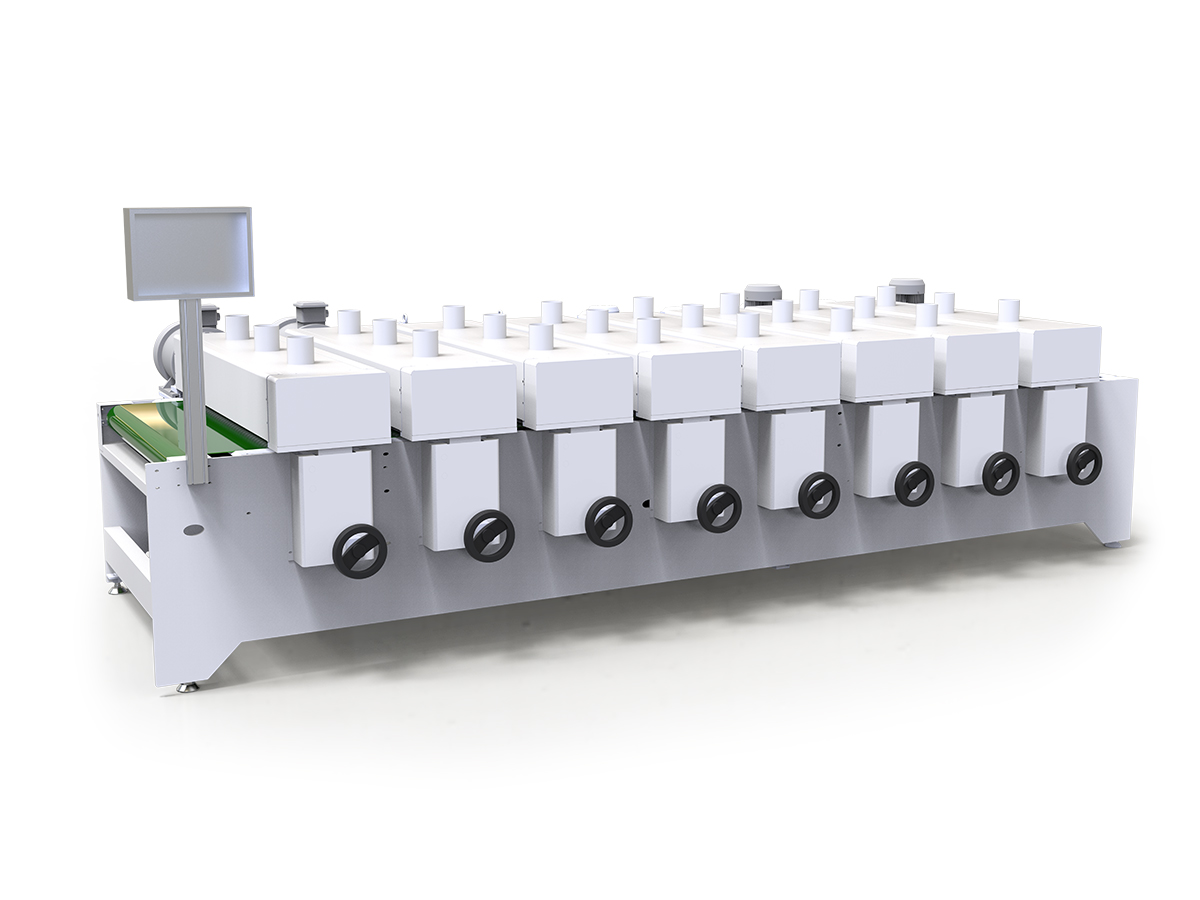
The ultimate goal is to make surface treatment a seamless, reliable, and efficient part of the manufacturing workflow. This involves considering factors like throughput, automation compatibility, and environmental controls. Modern systems are designed for integration, featuring robotics for handling complex parts, closed-loop media recovery in blasting systems, and real-time monitoring of treatment parameters (like power density in plasma systems or surface tension via test inks). This integration ensures repeatability, reduces labor costs, and eliminates the variability inherent in manual preparation methods. It transforms surface treatment from a standalone, often bottlenecked operation into a streamlined, value-adding stage that consistently delivers the perfect surface for downstream processes.
The Critical Investment for Manufacturing Excellence
In conclusion, the question of how a surface treatment machine improves adhesion and coating quality can be answered by viewing it as an enabling technology for molecular-level engineering. It is the indispensable bridge between a raw substrate and a high-performance coated product. By systematically increasing surface energy, creating optimal micro-roughness, and eliminating contaminants, these machines solve the root causes of coating failure. The result is not just improved adhesion, but a cascade of benefits: flawless appearance, maximum corrosion and chemical resistance, and extended product durability. Whether it's through an automated abrasive blasting systems for uniform surface profile, a low-temperature plasma treatment for plastic adhesion, a portable surface cleaning machine for large structures, or meticulous surface preparation for thermal spray coating, the investment in the right surface treatment machine is fundamentally an investment in product quality, reliability, and brand reputation. In competitive industrial landscapes, where failure is not an option, robust surface preparation is not an expense—it is a cornerstone of manufacturing excellence and long-term value creation.



 English
 中文简体
中文简体

