Surface coating equipment encompasses the full category of industrial machines that apply protective, decorative, or functional layers to a substrate — whether metal, wood, plastic, glass, or composite material. The coating applied may be a liquid paint, powder, UV-curable resin, lacquer, wax, oil, or specialty film, and the equipment that delivers it must be precisely matched to the coating chemistry, substrate material, required throughput, and final finish specification.
In modern manufacturing, surface coating is rarely a cosmetic afterthought. The coating layer determines a product's resistance to corrosion, abrasion, UV degradation, moisture, and chemical attack. In competitive markets — from automotive components to consumer electronics to architectural millwork — the surface finish is also a primary quality signal that directly influences purchasing decisions. Selecting the right surface coating equipment is therefore both an engineering decision and a commercial one.
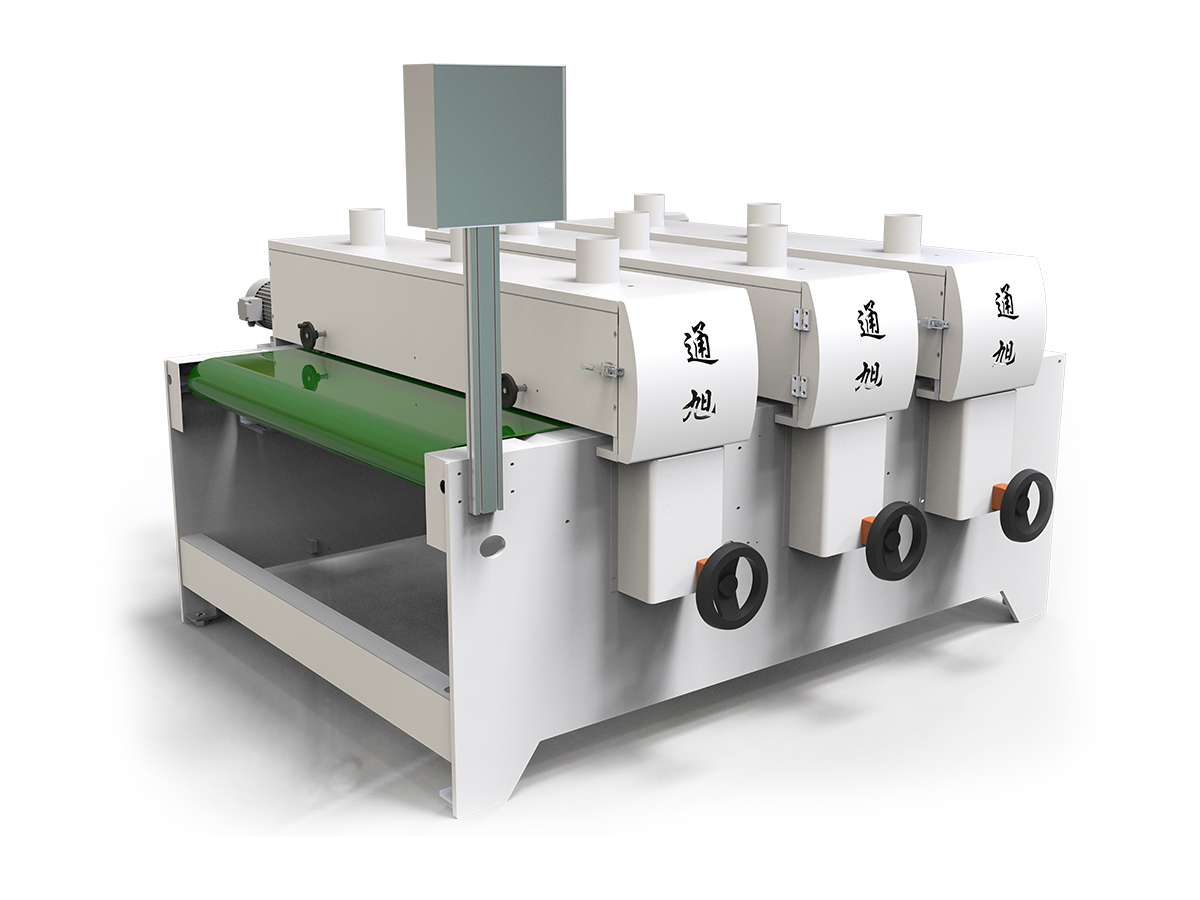
Major Categories of Surface Coating Equipment
Industrial surface coating equipment divides into several distinct machine families, each suited to a particular combination of coating material, application method, and production volume:
- Spray coating systems: Airless, air-assisted airless, and electrostatic spray guns atomize liquid coatings into fine droplets. Automated reciprocating spray machines and robotic spray arms handle high-volume production lines with consistent film thickness and minimal overspray waste. Transfer efficiency — the percentage of coating material that actually adheres to the workpiece — is the critical performance metric, with electrostatic systems achieving 85–95% compared to 30–50% for conventional air spray.
- Roller coating machines: A pair of precision-ground steel or rubber rollers transfers a metered film of coating directly onto flat panel surfaces. Roller coaters are the dominant technology in wood panel, furniture board, and flooring manufacturing because they deliver exceptional film thickness uniformity (±1–2 µm) at line speeds of 20–80 m/min with near-zero overspray.
- Powder coating systems: Electrostatically charged dry powder particles are sprayed onto grounded metal substrates, then cured in a convection or infrared oven. Powder coating lines produce extremely durable, solvent-free finishes and allow 95%+ material recovery of overspray, making them the preferred choice for metal furniture, architectural aluminum, and automotive components.
- UV coating machines: A UV-curable liquid coating is applied by roller or curtain coater, then instantly cross-linked by high-intensity ultraviolet lamps or LED arrays. Cure times of under 1 second allow extremely high line speeds and eliminate solvent flash-off, making UV coating lines dominant in flooring, flat-panel furniture, and printing substrate finishing.
- Curtain coating machines: A continuous, controlled curtain of liquid coating falls vertically across a moving substrate. Curtain coaters apply high-volume coatings — primers, sealers, UV base coats — to flat panels at speeds up to 150 m/min with exceptional coverage uniformity and no mechanical contact with the substrate surface.
- Vacuum coating and PVD systems: Physical vapor deposition chambers deposit ultra-thin metallic, ceramic, or diamond-like carbon films on substrates under high vacuum. These systems serve precision engineering, optics, decorative metallic finishes on plastics, and wear-resistant coatings on cutting tools.
Furniture Surface Treatment Equipment: A Specialized Discipline
Furniture surface treatment equipment refers to the integrated set of machines that process wood, MDF, particleboard, solid wood, and upholstered components through the complete surface finishing sequence — from raw substrate preparation through primer application, intermediate sanding, topcoat application, and final inspection. Furniture finishing demands a uniquely broad equipment range because the end products span from mass-produced flat-pack carcasses to hand-finished solid wood luxury pieces, each with fundamentally different process requirements.
A complete furniture surface treatment line typically comprises the following machine stages in sequence:
- Wide-belt sanding machines: Remove milling marks, veneer glue squeeze-out, and surface irregularities from panels before any coating is applied. Calibrating sanders control panel thickness to ±0.1 mm accuracy, creating a consistent substrate for the coating process.
- Sealer/primer application: Roller coaters or curtain coaters apply a penetrating sealer that closes the wood grain and provides a stable base for subsequent topcoats. UV-curable sealers are applied and cured in a single pass, eliminating drying time from the production schedule.
- Intermediate sanding and buffing: Brush sanding machines or wide-belt intermediate sanders denib the sealed surface between coats, removing raised grain fibers and coating imperfections that would telegraph through to the topcoat.
- Topcoat application: Roller coaters, spray systems, or vacuum coaters apply the final decorative and protective layer — lacquer, polyurethane, oil, wax, or UV topcoat — at the specified film weight.
- Curing and drying: Convection ovens, infrared drying tunnels, or UV curing systems cross-link or dry the topcoat to its final hardness. LED UV systems have largely replaced traditional mercury UV lamps in new installations due to lower energy consumption and instant on/off capability.
- Final surface finishing: Polishing machines with oscillating or planetary abrasive pads buff the cured topcoat to the target gloss level — from matte (10–20 GU) to high gloss (85–95 GU) — and remove any dust nibs or surface defects.
Profile coating machines extend this capability to three-dimensional shapes: doors with raised or recessed panels, moldings, chair legs, and frame components that flat roller or curtain coaters cannot reach. Profile coaters use flexible roller heads, felt applicator rollers, or reciprocating spray systems to follow complex contours at production speed.
A surface treatment machine in the broadest industrial sense is not limited to coating application. The term correctly encompasses any machine that modifies the physical, chemical, or mechanical properties of a surface — including preparation processes that precede coating and post-treatment processes that enhance or protect the coated surface. Key categories include:
- Shot blasting and sandblasting machines: Project abrasive media (steel shot, grit, glass beads, or aluminum oxide) at high velocity against metal surfaces to remove rust, mill scale, and old coatings while simultaneously creating a controlled surface profile (anchor pattern) that dramatically improves coating adhesion. Sa 2.5 and Sa 3 cleanliness grades per ISO 8501-1 are standard specifications for structural steel and heavy equipment applications.
- Chemical pretreatment lines: Immersion or spray systems that apply phosphate conversion coatings, chromate conversion coatings, or zirconium-based nano-ceramic pretreatments to metal substrates before powder coating or liquid paint. Phosphating creates a microcrystalline layer that doubles or triples coating adhesion and corrosion resistance compared to untreated metal.
- Plasma surface treatment machines: Atmospheric plasma or corona discharge equipment activates polymer and composite surfaces by increasing surface energy, enabling adhesion of coatings that would otherwise bead up and delaminate on low-energy plastics such as polypropylene or PTFE.
- Flame treatment systems: Gas burner systems oxidize and activate the outermost molecular layer of plastic or foam surfaces, raising surface energy from below 30 mN/m to above 50 mN/m — the threshold required for reliable ink, adhesive, and coating adhesion.
- Polishing and buffing machines: Orbital, planetary, and belt polishing systems bring coated or uncoated surfaces to specified roughness and gloss levels. In metal fabrication, polishing machines prepare stainless steel sheet for decorative architectural applications; in furniture manufacturing, they refine high-gloss lacquer surfaces to piano-finish quality.
Comparing Key Surface Coating Technologies for Furniture and Panel Products
| Technology |
Typical Line Speed |
Film Thickness Uniformity |
Best For |
Key Limitation |
| Roller coater |
20–80 m/min |
±1–2 µm |
Flat panels, flooring, MDF |
Flat substrates only |
| Curtain coater |
Up to 150 m/min |
±3–5 µm |
High-volume primers and sealers |
Edge coverage gap |
| Spray system (auto) |
5–25 m/min |
±5–15 µm |
3D profiles, doors, frames |
Overspray, ventilation required |
| UV roller/curtain coater |
20–100 m/min |
±1–3 µm |
Flooring, high-gloss furniture |
UV coating cost, flat only |
| Powder coating line |
3–10 m/min |
±5–10 µm |
Metal furniture, frames |
Metal substrates only, oven required |
Table 1 — Performance comparison of primary surface coating equipment technologies for furniture and panel manufacturing.
Automation and Industry 4.0 Integration in Modern Coating Lines
The most significant shift in surface coating equipment over the past decade has been the move from stand-alone machines operated manually toward fully integrated, automated coating lines controlled by centralized PLC and SCADA systems. Modern surface treatment machines increasingly incorporate:
- Automatic film thickness control: Inline wet film thickness sensors or X-ray fluorescence gauges measure coating weight in real time and feed corrections back to the applicator roller gap or spray pressure, maintaining target film weight within ±2% across an entire production shift without operator intervention.
- Robotic spray arms: Six-axis robots replace fixed reciprocators on complex 3D component lines, following programmed spray paths that adapt to workpiece geometry detected by upstream vision systems. Robotic systems reduce overspray by 20–40% compared to fixed automation and enable rapid changeover between part programs.
- Automatic color change systems: Closed-loop flushing and fill systems on spray lines can complete a full color change in under 90 seconds with minimal coating waste, enabling economical small-batch production and custom color orders without production stoppages.
- Energy monitoring and optimization: Smart curing ovens and UV systems modulate power consumption in real time based on production speed and substrate temperature feedback, reducing energy costs by 15–30% versus fixed-power designs.
- Digital quality traceability: Each panel or component is assigned a production record linking substrate batch, coating material lot, application parameters, cure temperature profile, and inline quality measurements — providing full traceability for warranty claims, regulatory compliance, and process optimization.
Selecting the Right Surface Treatment Machine for Your Production Requirements
Matching surface coating equipment to a specific production environment requires systematic evaluation across several dimensions. The following framework guides the selection process:
- Substrate geometry: Flat panels are served by roller coaters, curtain coaters, and UV lines. Three-dimensional components — shaped furniture parts, moldings, profiles — require spray systems, profile coaters, or vacuum coaters. Mixed production environments may require both technologies in parallel or tandem.
- Coating chemistry compatibility: Water-based coatings, solvent-based lacquers, UV-curable resins, powder, and oil each impose different requirements on application equipment, atomization systems, roller materials, and curing technology. A machine specified for solvent lacquer is not directly transferable to UV chemistry without modification.
- Required throughput: Calculate the required linear meters per shift based on order volume, then select equipment rated at 120–150% of that figure to allow for changeovers, maintenance, and demand growth. Undersized equipment is the most common cause of coating line bottlenecks in growing furniture factories.
- Finish quality specification: Define the target gloss level, surface roughness (Ra), and allowable defect rate before evaluating equipment. High-gloss piano finishes and automotive-quality surfaces require more polishing and buffing stages, tighter film thickness control, and higher-grade filtration in spray booths than industrial or matte furniture finishes.
- Environmental compliance: VOC emission limits, wastewater treatment requirements for pretreatment lines, and powder recovery system regulations vary significantly by country and region. Confirm that the equipment configuration meets local environmental standards before purchase, as retrofitting pollution control equipment after installation is significantly more expensive than specifying it correctly from the outset.
A well-specified surface coating equipment investment — whether a single roller coater or a fully automated furniture surface treatment line — pays back through reduced coating material consumption, lower labor costs, consistent finish quality that reduces rework, and the ability to meet increasingly stringent customer finish specifications in competitive global markets.



 English
 中文简体
中文简体

