English
 中文简体
中文简体

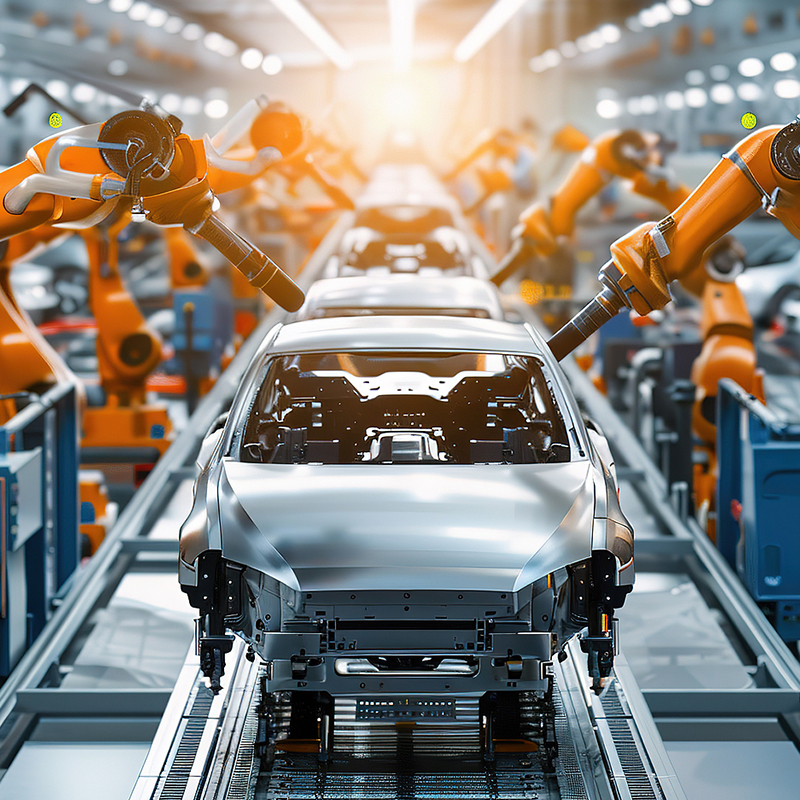
The application of intelligent coating system equipment in the automotive manufacturing sector spans the entire production process of complete vehicles and components, leveraging intelligent technologies to enhance coating quality, efficiency, and environmental protection. The following details the core application scenarios:
Complete Vehicle Coating: Full-process Intelligence from Corrosion Protection to Appearance
1. Body Primer Coating
- Function: Provides basic corrosion protection for the body and enhances adhesion between the metal surface and topcoat.
- Intelligent Applications:
- Robot spraying arms are combined with 3D visual sensors to real-time identify the curvature of the body surface, automatically adjusting the spraying angle and distance (error ≤0.5mm) to ensure uniform primer coverage on complex structures such as doors and hoods.
- Integrated with IoT technology, the system monitors parameters like paint temperature and viscosity in real time, automatically adjusting the spraying pressure (e.g., dynamically adjusting to the optimal 2-3bar based on temperature changes) to avoid uneven coating thickness caused by parameter fluctuations.
2. Intermediate and Topcoat Coating
- Function: The intermediate coat fills minor defects in the primer, while the topcoat gives the body color and gloss.
- Intelligent Applications:
- Precise Color Difference Control: Spectrometers collect real-time color data of the sprayed paint surface, compare it with the standard color card, and automatically correct spraying parameters (such as paint flow and spray gun movement speed) to ensure the vehicle-wide color difference △E < 1.0 (the industry standard is typically △E < 2.0).
- Flexible Color Change Production: For multi-model co-line production scenarios, the intelligent system can complete automatic cleaning of spray guns and paint pipelines and color paint switching within 10 minutes, improving efficiency by 50% compared to traditional manual color changes and reducing paint waste by over 30%.
3. Clear Coat Coating and Surface Treatment
- Function: Enhances paint gloss, hardness, and scratch resistance.
- Intelligent Applications:
- High-speed rotating atomizing spray guns (rotating at 20,000 rpm) are used, combined with AI algorithms to optimize the spraying trajectory, controlling the uniformity of the clear coat thickness within ±5μm and achieving a gloss of over 95° (mirror effect).
- An online detection system is integrated, which uses a laser scanner to scan the paint surface in real time, automatically identifies defects such as sagging and particles, and coordinates with robots for local touch-up, reducing subsequent manual sanding work.
Component Coating: Balancing High Precision and Functionality
1. Automotive Wheel Hub Coating
- Intelligent Solutions:
- For multi-specification wheel hubs (15-22 inches), the system automatically matches the spraying program through visual recognition. For example, hollow wheel hubs use multi-angle spray guns for surround spraying (360° rotation) to ensure 100% coating coverage in hidden areas such as the inner side of wheel spokes.
- Powder electrostatic spraying technology is introduced, intelligently adjusting the electrostatic voltage (60-100kV) and powder delivery volume to control the coating thickness uniformity within ±30μm, while reducing VOCs emissions by over 90% compared to traditional liquid coating.
2. Engine Component Coating
- Functional Requirements: High temperature resistance (needs to withstand 300-500℃), wear resistance, and oil resistance.
- Intelligent Applications:
- For engine components such as cylinder blocks and pistons, thermal spraying robots (equipped with plasma spray guns) are used to precisely control the melting temperature and spraying distance of coating materials (such as ceramics and metal alloys) to form a 0.1-0.5mm thick high-performance protective layer.
- Sensors monitor the surface temperature of components in real time, and AI algorithms dynamically adjust the spraying speed to avoid material deformation caused by local overheating.
3. Chassis Component Coating
- Typical Scenario: Chassis armor spraying (stone chip resistance, rust prevention).
- Intelligent Technologies:
- High-pressure airless spraying equipment (pressure up to 200bar) is used, combined with 3D modeling technology to automatically generate spraying paths based on the chassis structure, ensuring the coating thickness in complex areas such as exhaust pipes and suspensions reaches 1-2mm, meeting the ISO 12944-C5 standard for stone chip protection.
Personalized Customization and Flexible Production
1. Customized Color and Pattern Spraying
- Technical Implementation:
- Consumers can upload pattern designs through online platforms. The system automatically converts 2D patterns into 3D spraying paths and controls micro-spray guns (nozzle diameter 0.3-0.5mm) to achieve high-precision painting on local body areas (such as gradient colors and brand LOGO customization), with a minimum line precision of 1mm.
- For small-batch customization needs (such as limited-edition models), the intelligent system can quickly switch coating programs to achieve "single-unit personalized production", reducing the model change time from the traditional 2 hours to 30 minutes.
2. Intelligent Coating for Multi-model Co-line Production
- System Advantages:
- Different vehicle models are identified through RFID tags, and corresponding coating process parameters are automatically called, enabling flexible production of sedans, SUVs, trucks, etc., on the same coating line, increasing equipment utilization by 40%.
Environmental Protection and Intelligent Management
1. VOCs Emission Reduction and Resource Recovery
- Technical Applications:
- A zeolite rotor + RTO (regenerative thermal oxidizer) combined system is used to intelligently monitor the VOC concentration in waste gas. When the concentration is>200ppm, the incineration treatment is automatically started, with a purification efficiency of over 98%. Meanwhile, the heat from incineration is recovered for paint drying, reducing energy consumption by 15%.
- The paint circulation system improves the recovery rate of uncured paint to 90% through intelligent filtration and stirring technologies, reducing waste emissions.
2. Full-Process Digital Management
- System Integration:
- Connected to the MES (Manufacturing Execution System), it collects real-time coating process data (such as paint usage, spraying time, and equipment operation status for each vehicle), generates visual reports, and helps managers optimize production scheduling to reduce energy consumption costs (e.g., optimizing the drying oven temperature through data reduces energy consumption per vehicle by 8%).
- Predictive maintenance technology is adopted, which monitors potential failures such as robot joint wear and spray gun blockage through sensors, issues early warnings, and automatically arranges maintenance plans, reducing equipment downtime by over 20%.
Typical Cases and Technical Highlights
- Tesla Shanghai Factory: Using more than 300 FANUC coating robots combined with an AI visual inspection system, it achieves fully automated body coating for Model 3, with a coating yield of 99.5%, and the coating energy consumption per vehicle is 35% lower than traditional processes.
- BMW Dingolfing Plant: Introduces AR technology to assist in coating debugging. Engineers can view virtual spraying effects in real time through AR glasses and optimize the spray gun trajectory, reducing the debugging time for personalized coating from 4 hours to 1 hour.
Conclusion
The application of intelligent coating systems in the automotive manufacturing sector has evolved from (mere) "automated spraying" to a "digital, flexible, and green" full-process solution. It not only improves the appearance quality and durability of vehicles but also promotes the development of automotive manufacturing towards "zero emissions, high efficiency, and personalization" through intelligent technologies. In the future, with the deep integration of 5G, digital twin, and other technologies, automotive coating will further evolve towards "unmanned intelligent factories".